Personnel hoists are heavy-duty vertical transport systems engineered to move workers and materials between floors at speeds that manual alternatives cannot approach. On dense Ontario job sites, where schedule compression is a constant pressure, the difference between a capable hoist and an inadequate one directly affects workforce productivity and project coordination. Compliance with provincial safety standards, including requirements aligned with CSA and ANSI frameworks supported by UCEL Inc.’s manufacturing partners, is non-negotiable from day one of deployment.
People Also Ask
Why should construction elevator rental be planned early
Early planning helps secure equipment availability, allows time for engineering coordination, and reduces the risk of schedule delays during peak construction seasons. It also supports predictable vertical access so crews and materials aren’t left waiting when critical phases begin.
What risks come with last-minute construction hoist rental?
Last-minute rental can lead to limited equipment availability, higher rental costs, rushed installation, and productivity disruptions. It can also force teams into suboptimal equipment choices that slow lifting cycles and restrict workforce flow.
What is a construction hoist?
A construction hoist (often called a construction elevator or goods-and-passenger hoist) is a temporary lifting device used on construction sites to move personnel, materials, and equipment vertically between levels. It’s commonly used on larger projects where stairs or ladders would be inefficient for daily access.
Core Features of Vertical Transportation Solutions
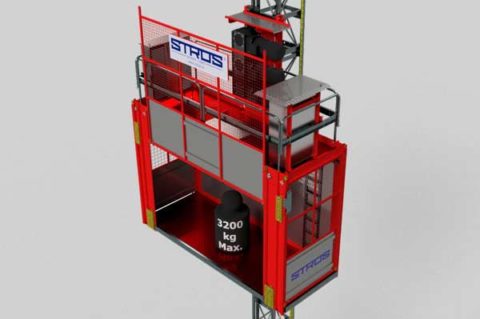
Ruggedized enclosures, galvanized mast sections, and weather-resistant drive systems enable personnel hoists to operate reliably through Ontario’s freeze-thaw cycles and high-wind conditions. Advanced overload protection systems prevent unsafe loading before a cage leaves grade level. Emergency braking mechanisms, including rack-and-pinion safety devices, automatically arrest descent, thereby supporting safer vertical transport during operation.
The Shift Toward Integrated Site Logistics
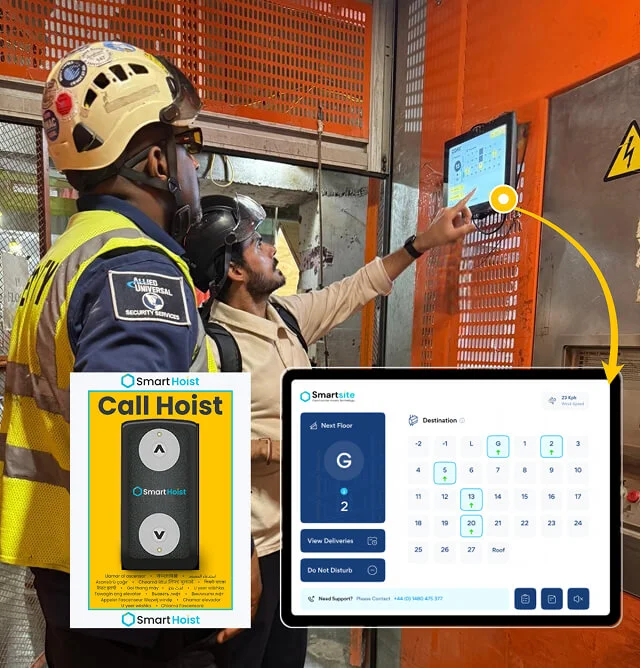
The industry has moved away from manual rope-and-pulley hoisting toward automated, electronically governed systems that integrate with broader site logistics planning. Remote operation panels and real-time monitoring displays allow site supervisors to track hoist utilization, queue trips, and identify workflow bottlenecks before they affect scheduling. Contractors increasingly treat vertical transport as part of broader site logistics planning to help improve workflow coordination.
Why Inefficient Vertical Transport Causes Labor Downtime
When vertical transport is undersized or unreliable, the ripple effect across a multi-trade site can become severe. Electricians, mechanical crews, and finishing trades often share the same vertical corridor, and a single bottleneck can disrupt multiple workflows simultaneously. Manual material handling at height can contribute to operational inefficiencies and workflow delays on active construction sites.
The Hidden Costs of Waiting
Waiting for a slow or unavailable hoist affects not only the worker standing at the landing. It can interrupt the entire trade sequence behind that worker, compressing downstream schedules and increasing overtime exposure. Procurement managers frequently evaluate dedicated vertical transport systems to help reduce avoidable downtime during peak construction phases.
Safety Risks and Operational Bottlenecks
Crane systems pressed into personnel transport duty introduce maneuvering constraints and load cycle inefficiencies that dedicated hoists eliminate by design. Sites that replace improvised lifting arrangements with certified personnel hoists can improve operational control and the consistency of vertical transport. The operational bottleneck created by an undersized crane may also force workers to carry loads manually up stairwells, increasing fatigue and workflow disruption.
How to Deploy Personnel Hoists for Maximum Efficiency
Effective deployment begins with a structured site assessment rather than equipment selection alone. The process should follow a deliberate sequence to help reduce costly mid-project reconfigurations.
- Conduct a full site logistics audit covering floor count, trade density, and peak hour transport demand.
- Define weight capacity and platform size requirements before approaching any supplier.
- Coordinate hoist placement with the general contractor’s crane and scaffold schedules.
- Confirm the availability of the power supply and the compatibility of the motor configuration at the planned installation point.
- Engage a rental or sales consultant, such as the project support team at UCEL Inc., early in the planning cycle to help right-size the solution.
Reaching out to UCEL Inc.’s consultation team before mobilization can help prevent equipment mismatches that generate unnecessary downtime.
Assessing Site Constraints and Capacity Needs
Height access requirements and rated payload capacity must be evaluated together rather than independently. A hoist sized for payload but underspecified for mast height may require mid-project extensions that disrupt surrounding trades. Motor configuration, whether single-phase or three-phase, must also match the available site power to avoid dependence on the generator, which adds cost and operational complexity.
Installation and Preventive Maintenance Protocols
Freestanding hoist deployment requires precise base anchoring and mast tie-in intervals that conform to manufacturer engineering specifications. Regular inspection intervals covering rack wear, brake function, and electrical continuity help prevent minor faults from escalating into major stoppages. Operator training is equally important because properly trained operators help extend equipment longevity and ensure safer site operations.
Integrating Goods and Personnel Hoists Into Site Workflows
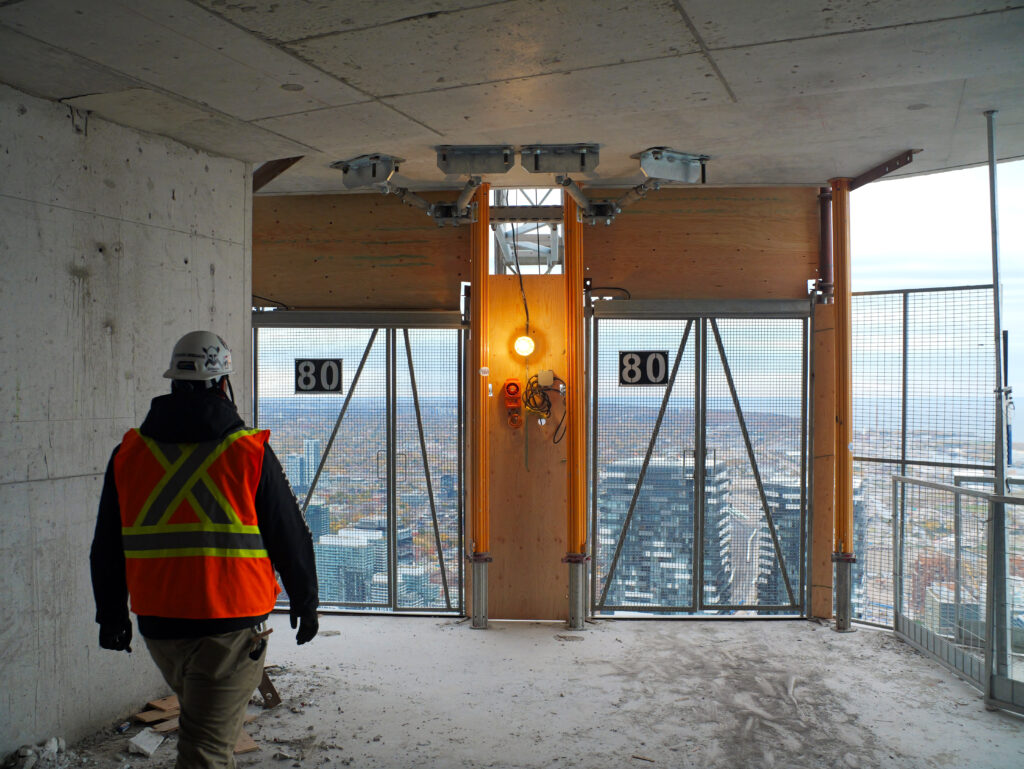
Goods and personnel hoists provide dual utility by moving both workers and construction materials within the same vertical corridor. Contractors who install hoistways early in the construction sequence gain access to upper floors before the building envelope is fully closed. Projects using integrated vertical transport strategies can improve coordination between material movement and workforce access.
Expanding Vertical Transport Capacity
Self-climbing elevator systems designed for high-rise buildings extend their own mast as the structure rises, reducing the need for repeated crane-assisted extensions. Floor-locking mechanisms and trip-prioritization controls allow site supervisors to direct the hoist to the highest-demand floors during peak activity periods. On mid-rise logistics applications, this level of control can support smoother material flow and reduce inter-trade congestion.
Reducing Reliance on External Hoists
Transitioning from external crane dependency to a dedicated internal hoist system often follows a phased timeline tied to structural milestones. As the permanent elevator hoistway becomes accessible, a well-planned transition can reduce dependence on external hoists during later project stages. Data-driven scheduling recommendations from experienced vertical transport providers can help identify transition points that support efficient workflow coordination.
Applications of Personnel Hoists in High-Rise Projects
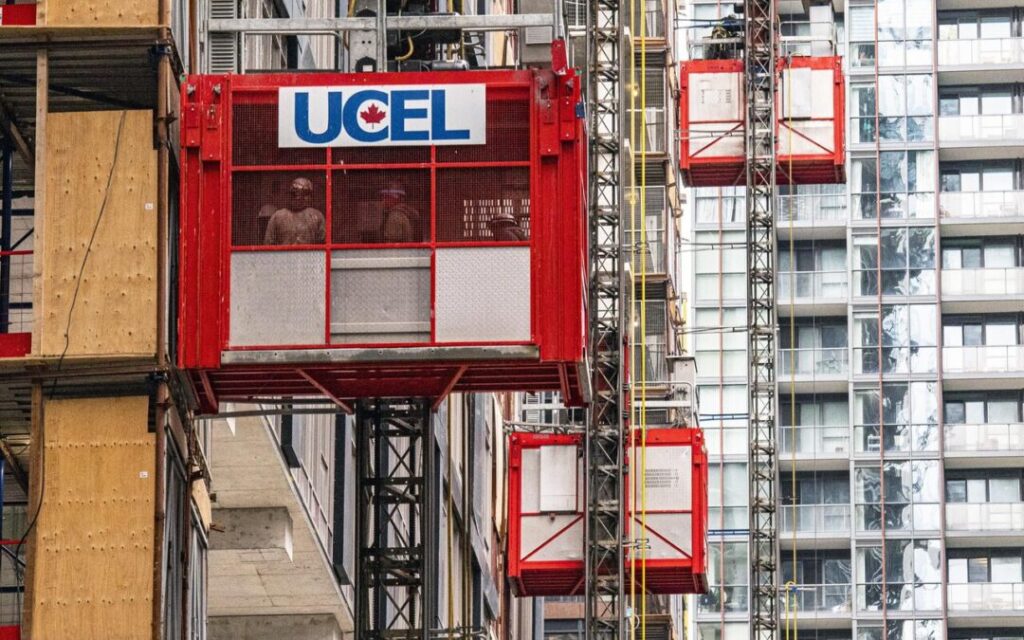
Specialized vertical transport solutions have supported productivity improvements on high-rise projects across Ontario and internationally, with UCEL Inc. supporting tall-structure builds since the company’s founding in 1963. Reduced reliance on crane systems and improved material flow can help support more predictable site operations. Certified personnel hoists are also commonly used on projects operating under strict industrial and regulatory requirements.
Streamlining Scaffold Material Transport
Telescoping boom basket systems deployed in refinery and industrial settings allow operators to reposition scaffold materials across multiple elevations with greater control. The reduction in manual repositioning requirements is frequently viewed as an important operational advantage. Compared to traditional crane-and-sling methods, boom basket systems enable more controlled repositioning and improved precision in material handling.
Accelerating European and North American Builds
International project experience has informed UCEL Inc.’s approach to adapting vertical transport configurations to Ontario building codes and site conditions. Manufacturer partners whose equipment meets standards such as ISO, TUV, and CSA provide a strong operational foundation for demanding construction schedules. Many project teams evaluate planned hoist deployment as part of broader long-term logistics and operational planning.
Securing Used Personnel Material Hoists and New Systems
The decision between renting and purchasing vertical transport equipment carries important financial and operational implications for project teams. Rental arrangements preserve capital, eliminate storage obligations between projects, and transfer maintenance responsibilities to the provider. For projects with defined timelines, rental solutions may offer greater operational flexibility than an outright purchase.
Evaluating Cost-Effective Alternatives
Used personnel material hoists that have been reconditioned and certified to current safety codes can provide a cost-effective option for contractors managing tight equipment budgets. Avoiding upfront purchase and long-term storage expenses makes certified used equipment a practical option for project-specific deployments. Long-term industrial rental contracts also provide predictable maintenance planning and service support.
Partnering with Experienced Vertical Transport Providers
UCEL Inc. has supported Ontario construction and industrial projects since 1963, bringing specialized experience to equipment selection, installation, and operator training. Province-specific regulatory compliance, including alignment with Ontario occupational health and safety requirements, is integrated into every project engagement. Comprehensive support from initial consultation through preventative maintenance provides project teams with ongoing technical and operational support throughout deployment. For more information, contact us now!