
Toronto’s construction sector faces compounding labor cost pressures, making every unproductive hour on-site a measurable liability. Skilled trades wages in the Greater Toronto Area have climbed steadily over recent years, driven by tight labor markets, union agreements, and sustained demand across high-rise residential, commercial, and infrastructure projects. For project managers and procurement leads, the margin for inefficiency has narrowed considerably.
Modern scaffolding hoists are designed to support safer and more efficient material handling in dense urban environments where access limitations and scheduling constraints are common. UCEL Inc. has supported the vertical access industry since 1963 by providing equipment solutions for demanding construction and industrial applications across Canada.
People Also Ask
Why should construction elevator rental be planned early?
Planning early helps secure equipment availability, allows time for engineering coordination, and reduces the risk of schedule delays during peak construction seasons. It can also help avoid productivity losses caused by crews waiting on vertical transport.
What risks come with last-minute construction hoist rental?
Last-minute rental can lead to limited equipment availability, higher rental costs, rushed installation, and jobsite productivity disruptions. These issues can create downtime when crews and materials can’t move efficiently between levels.
Can a material hoist carry people?
No—material hoists are intended for transporting materials only, not people. For example, Scaffolding Solutions states that material hoists are only allowed to transport material, not people.
The Hidden Costs of Manual Material Handling
Direct field labor accounts for a substantial share of total project costs on most vertical construction sites, and manual material handling quietly inflates that figure. Workers carrying loads up scaffold stairs or passing materials manually experience fatigue throughout a shift. This can slow productivity and increase operational errors. Schedule delays caused by inadequate vertical transport are rarely captured in a single line item, yet they consistently extend project durations and erode profitability.
Impact on Tower Crane and Elevator Availability
Tower cranes and construction hoists are premium assets with tightly scheduled lift windows. When scaffold crews rely on these primary systems to move cladding panels, mortar, or restoration materials, they compete directly with structural trades for access, creating bottlenecks that ripple across the entire program. On a high-rise facade restoration project, for example, waiting for crane availability between lifts can idle a full scaffold crew for hours, a cost that accumulates rapidly across weeks of work.
How Do Material Hoists for Scaffolding Solve Vertical Transport Challenges?
Material hoists for scaffolding address the vertical transport gap by providing a dedicated, scaffold-mounted lifting solution that operates independently of primary crane and elevator systems. Rather than routing every material movement through a congested central lift, teams gain a direct, controlled supply line to the working platform. The operational result is a measurable reduction in idle time and a more predictable daily workflow.
Engineering for Seamless Scaffold Integration
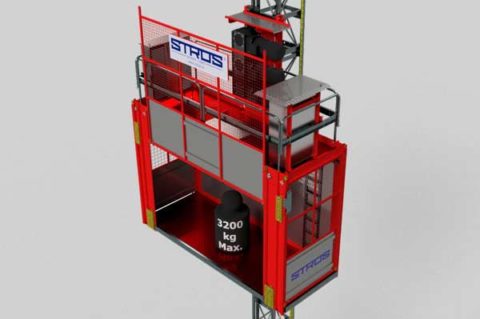
Modern scaffolding hoists are engineered with compact footprints suited to the constrained urban sites common across Toronto’s dense core. Flag-mounted configurations attach directly to scaffold standards, while gantry-mounted variants suit wider platform arrangements. Wire rope systems offer cost-effective performance for lighter, repetitive lifts, whereas rack-and-pinion mechanisms deliver superior load control and precision for heavier materials. Equipment sourced from European manufacturers, whose products carry internationally recognized safety certifications such as TUV certifications, provides a meaningful quality baseline above commodity alternatives.
Mitigating Safety Risks and Weather Downtime
Manual handling injuries are among the most frequently reported incident categories on scaffold-intensive projects. Mechanizing vertical transport removes the repetitive strain and overexertion exposures that drive those incidents. Responsible hoist deployment also requires clear operational protocols. Wind speed limits must be observed, load capacities must never be exceeded, and emergency braking systems must be tested at commissioning. Overload protection features built into quality scaffolding hoists help reduce the risk of operator error during lifting operations.
What Are the Key Steps to Implement Material Hoists for Scaffolding?
Effective implementation begins well before equipment arrives on site. Procurement teams that treat hoist integration as a late-stage logistics detail consistently encounter avoidable rework, power-supply conflicts, and platform-loading issues. A structured pre-deployment process eliminates the majority of these friction points.
Assessing Site Logistics and Power Requirements
- Evaluate the available footprint to determine whether flag-mounted or gantry-mounted configurations suit the scaffold layout
- Confirm available voltage and phase power at the base location, as rack and pinion units typically require a three-phase supply
- Establish maximum weight capacity requirements based on the heaviest anticipated single lift
- Verify lifting speed requirements against the planned material delivery schedule
Integrating Hoist Plans During Early Design Phases
Scaffold structures modeled early in the design phase allow engineers to incorporate hoist attachment points, platform reinforcement, and tie-back requirements before fabrication begins. Simplified designs that account for hoist integration from the outset help reduce clashes between lifting equipment and facade access requirements. When hoists are incorporated into preplanning workflows, project teams can better coordinate mobilization, scaffold integration, and material flow requirements. Contact our team early in your project planning cycle to align site logistics with the right equipment configuration.
Which Scaffolding Hoists Maximize Efficiency Over Manual Material Handling?
The efficiency gap between mechanized vertical transport and manual methods widens as building height increases. At mid-rise and above, the time cost of manual lifts compounds with every additional floor, making the productivity case for scaffolding hoists progressively stronger. Selecting the right system requires evaluating both technical performance and operational fit.
Comparing Modular Systems and Traditional Methods
Modular hoist systems are installed materially faster than tube-and-clamp scaffold arrangements assembled around improvised lifting points. Their standardized components also support efficient material recycling plans, as sections can be stripped, inspected, and redeployed across multiple project phases without custom fabrication. For facade and restoration work specifically, the ability to deliver bulk materials directly through small window openings via controlled hoist positioning reduces handling steps and the associated risk of damage.
Evaluating Long-Term Rental Versus Equipment Sales
Rental models provide access to current-generation equipment without the capital commitment of outright purchase, a meaningful advantage for contractors managing variable project pipelines. Sales make stronger financial sense for organizations with consistent, high utilization demand across multiple concurrent sites. Whichever model applies, the availability of original spare parts and a structured maintenance program are critical operational considerations.
Ready to Deploy Material Hoists for Scaffolding on Your Next Project?
Delaying the decision to integrate material hoists for scaffolding carries real costs: extended labor hours, increased injury exposure, and schedule risk that compound as project complexity grows. The window to secure the right equipment and plan the integration properly is earlier than most teams expect.
Partnering with Experienced Vertical Access Specialists
UCEL Inc has operated in the vertical access and material handling sector since 1963, accumulating project experience across tall buildings, industrial facilities, and complex urban restoration programs. The company’s equipment portfolio includes products from top global manufacturers designed to meet standards such as ISO, ANSI, TUV, and CSA. Robust after-sales support and maintenance contracts help sustain equipment performance throughout the project lifecycle.
Requesting a Custom Site Assessment
Every project presents a distinct combination of height, access constraints, power availability, and material handling requirements. UCEL Inc.‘s site assessment process evaluates these variables systematically to recommend the configuration that best matches project demands. Proactive engagement also helps protect equipment availability, as demand for scaffolding hoists in Toronto’s active construction market means lead times matter. Reach out to schedule your consultation and ensure your next project is equipped to perform from day one.