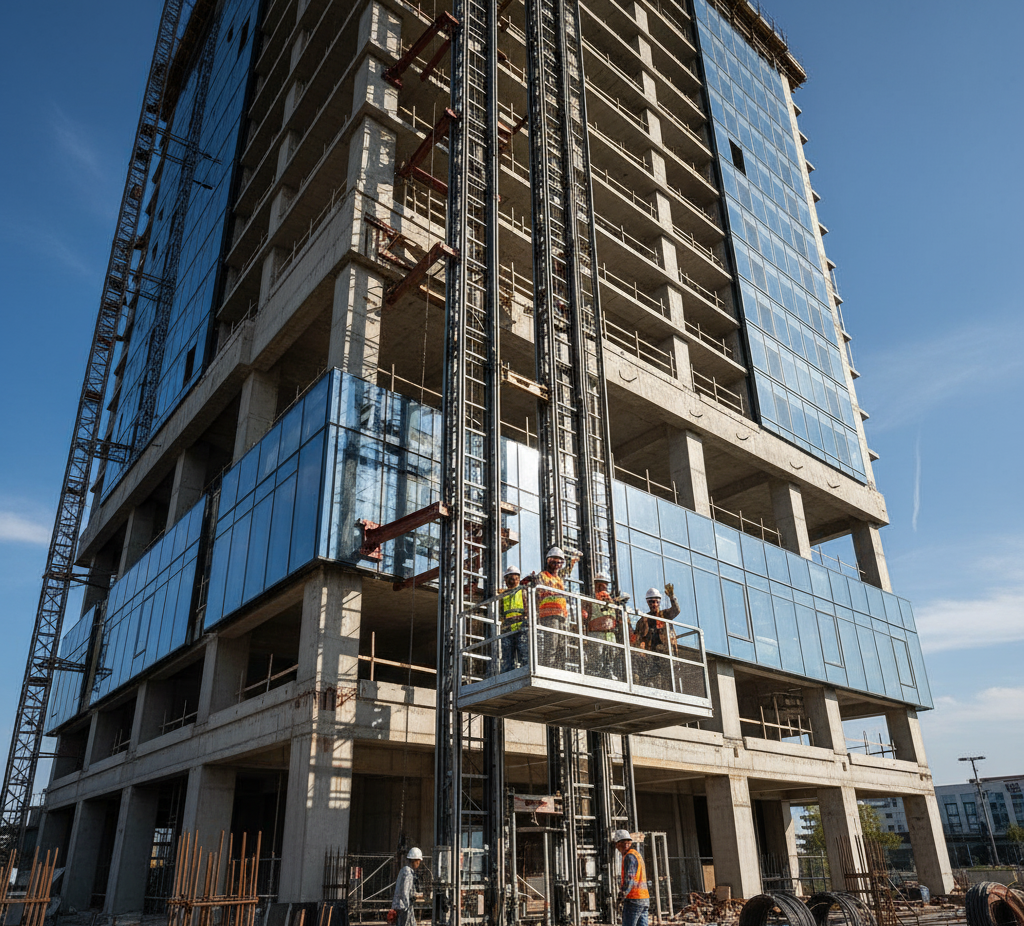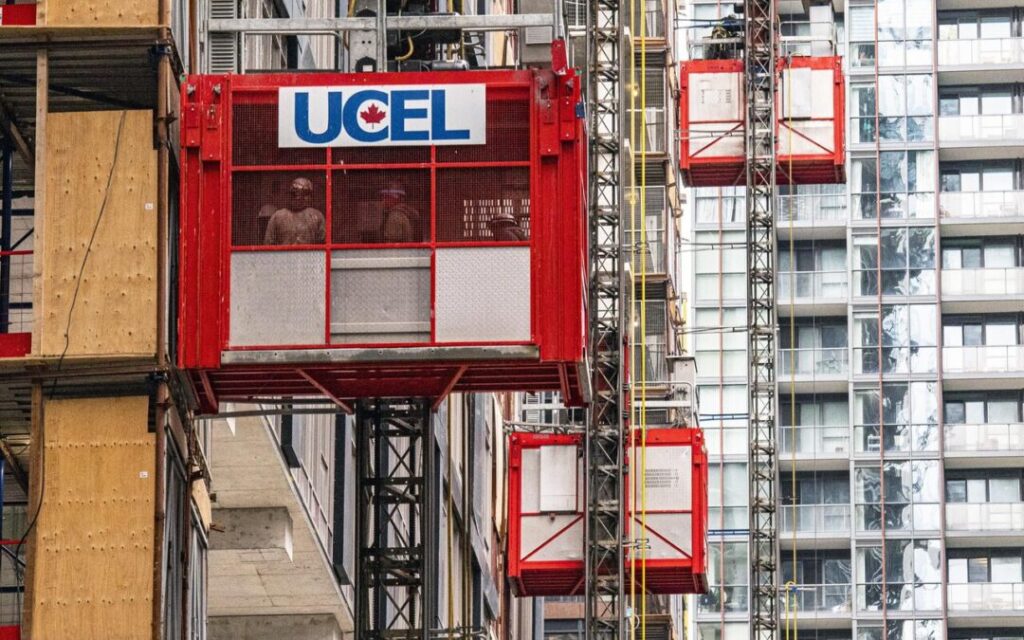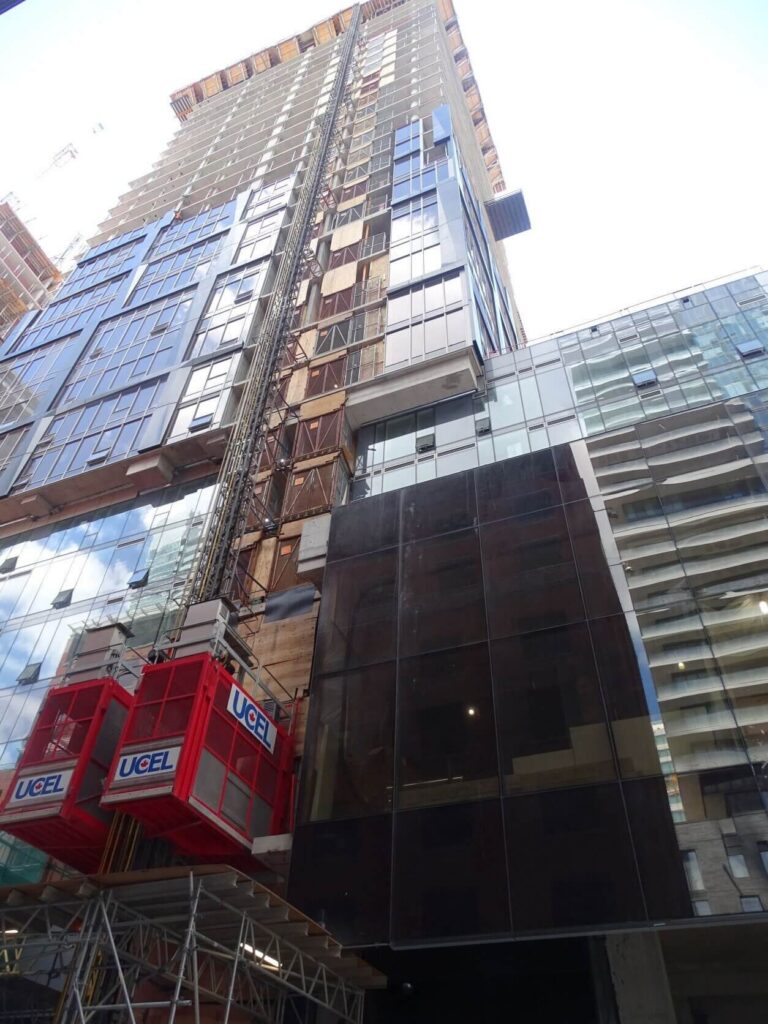
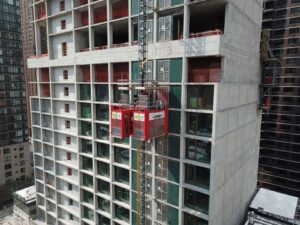
Vertical logistics is one of the most consequential yet underestimated challenges in any high-rise construction project. When supply movement stalls, finishing trades idle, schedules compress, and penalty exposure grows. A purpose-built material lift elevator directly addresses this vulnerability by creating a dedicated cargo pathway that operates independently of personnel hoisting systems.
Separating cargo from worker transport is not merely a scheduling convenience. It is a safety discipline that reduces congestion at landing zones, lowers manual handling strain, and keeps high-value materials moving at the pace the project demands. UCEL Inc. has supported contractors across demanding vertical construction environments since 1963, and the pattern is consistent: sites that deploy dedicated material-handling equipment achieve meaningfully better schedule adherence than those relying on shared or improvised hoisting arrangements.
People Also Ask
Why should construction elevator rental be planned early?
Planning early helps ensure equipment availability during peak seasons and provides time for engineering coordination (base prep, tie-ins, and compliance documentation), reducing the risk of schedule delays. It also supports more predictable budgeting by aligning rental duration with project phases.
What risks come with last-minute construction hoist rental?
Last-minute rental can lead to limited equipment availability, higher costs, rushed installation, and productivity disruptions if the hoist isn’t properly matched to site needs. Compressed timelines can also increase the chance of rework or delays during commissioning.
What are the advantages of rack and pinion elevators on construction sites?
Rack-and-pinion construction elevators provide consistent lifting power, high load capacity, and stable operation without relying on traction cables, which makes them well-suited for high-rise job sites. Properly sized systems can reduce vertical-transport bottlenecks for crews and materials.
Why a Material Lift Elevator Outperforms Traditional Hoisting
Tower cranes are precision assets designed for structural steel, precast panels, and large mechanical equipment. Routing bulk interior supplies via crane introduces scheduling friction that compounds across every trade that depends on those materials. A dedicated material elevator removes that friction entirely by cycling continuously between floors without competing for crane time.
The operational advantage is most visible during interior finishing phases, when the volume of smaller, frequent deliveries peaks. Drywall, mechanical components, flooring materials, and fixtures all move more predictably through a purpose-built vertical transport system. Contractors who delay this transition consistently report cascading trade delays that are far more costly than the equipment deployment itself. For a deeper breakdown of how equipment selection affects project scheduling, see our guide on construction hoist planning.
Key Features of a Reliable Material Lift Elevator
Platform construction is the foundation of reliable performance. Heavy-duty steel decks rated for continuous industrial cycling resist deformation under sustained load and maintain structural integrity through extended exposure to weather, dust, and vibration. This durability is not incidental; it directly determines whether the equipment performs consistently across the full project duration.
Safety systems are equally non-negotiable. Advanced overload protection prevents platform exceedance before it becomes a structural event, while mechanical safety locks engage automatically if drive speed deviates from operating parameters. These features align with the safety standards upheld by UCEL’s manufacturing partners, whose equipment carries certifications such as ISO, ANSI, TUV, and CSA, providing contractors with a verifiable baseline for compliance during site inspections.
Rack-and-pinion drive mechanisms are the preferred configuration for tall structures because they deliver a consistent lifting force regardless of height. Unlike cable-based systems, rack-and-pinion drives do not experience load-dependent speed variation, which means platform behaviour at upper floors mirrors performance at lower floors, a critical reliability factor on projects where upper-floor delivery timing is tightly sequenced.
Selecting the Right Material Lift Elevator with UCEL Inc.
Site constraints are the starting point for configuration decisions. The material lift elevator configuration that provides the best operational fit depends on floor-to-floor height, power supply capacity, and footprint availability. Underperformance frequently results from skipping this assessment and opting for a generic specification, especially on limited urban sites where every square meter of ground-level space faces conflicting demands.
Regulatory compliance is a parallel priority. National safety codes govern installation, load ratings, and inspection intervals, and non-compliant equipment creates shutdown risk that can halt an entire project. UCEL Inc. brings decades of project support experience to this process, helping equipment managers navigate code requirements and configure systems that pass inspection without revision cycles.
We offer both rental and sales options, giving contractors the flexibility to match equipment commitment to project duration and budget structure. With partnerships across leading global manufacturers and a heritage of serving complex vertical construction projects since 1963, UCEL Inc. provides the technical depth and supply access that procurement managers and plant engineers require when the stakes of getting this decision wrong are highest.