Construction hoists are the backbone of vertical access on demanding jobsites, moving both personnel and materials with a reliability that manual methods cannot match. A well-specified construction hoist elevator compresses transit time between levels, keeping trades productive and schedules intact. For developers managing multi-story or high-rise projects, equipment selection is not a secondary concern. It directly determines whether safety standards are met, whether crews remain efficient across shifts, and whether the project maintains its critical path.
People Also Ask
What is a buck hoist?
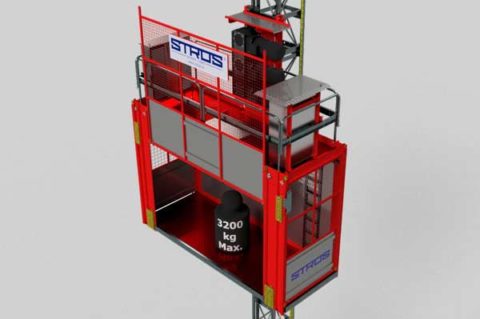
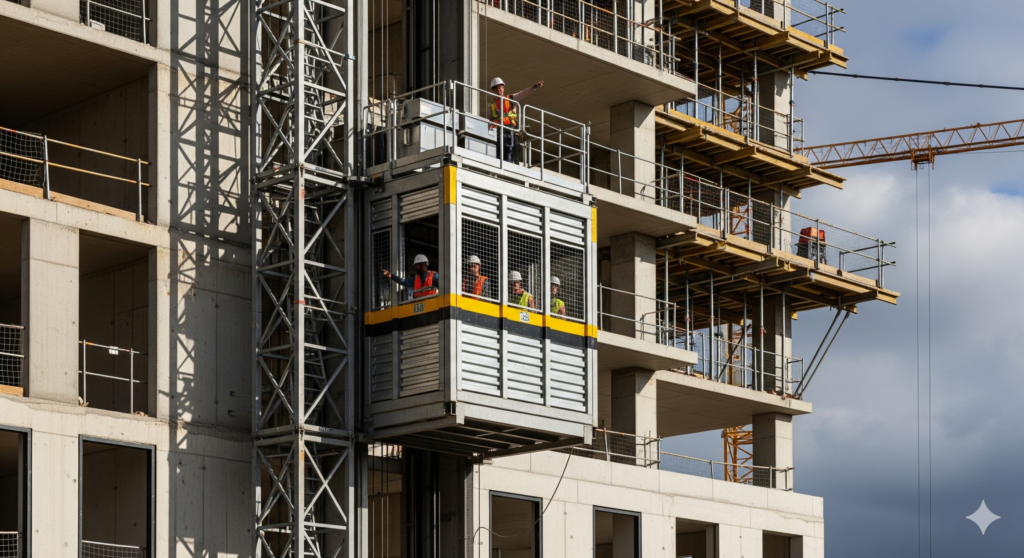
A buck hoist is a temporary construction elevator used on job sites to move workers, materials, or both between floors of a building under construction, typically traveling on an exterior mast/tower. Many modern buck hoists use a rack-and-pinion drive system for vertical travel.
How does a construction hoist work?
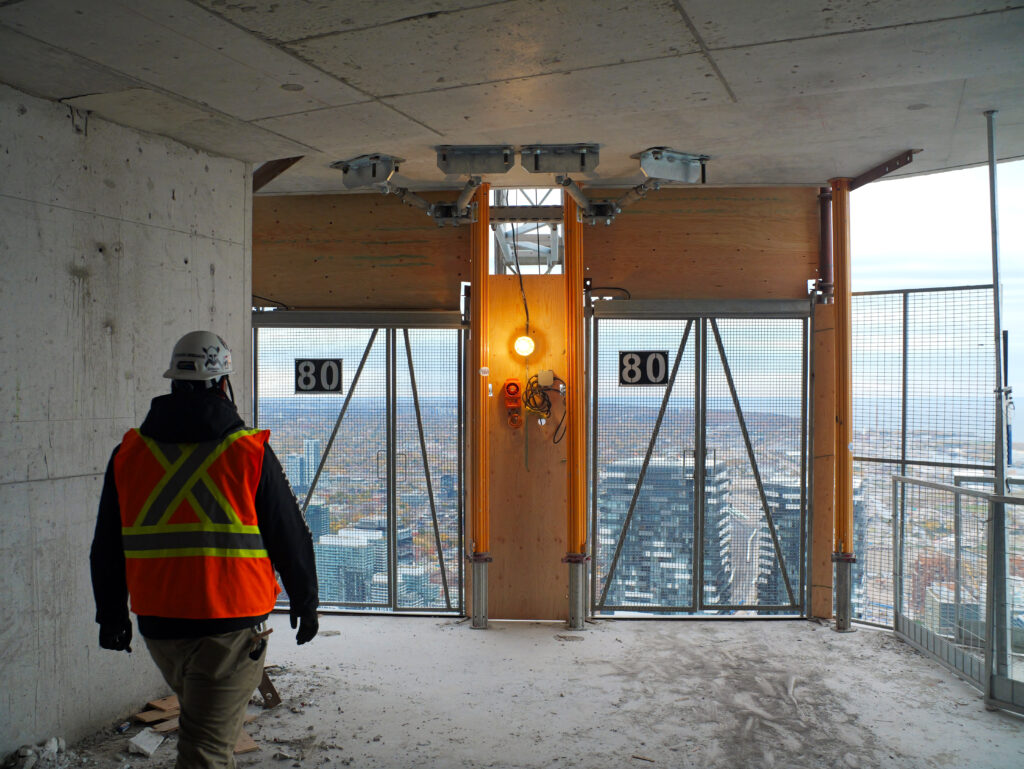
A construction hoist moves a cage/car vertically along a mast or track mounted to (or tied into) the structure, commonly using a rack-and-pinion drive to raise and lower the car. It stops at designated landings so crews can load/unload people and materials at different floors.
What is a material hoist?
A material hoist is a lifting device used to raise and lower materials (and, depending on the specific equipment and rules, sometimes people), ranging from small warehouse-style hoists to larger exterior hoists that operate like a temporary elevator. On large buildings, material hoists can be mounted to the outside and travel on secured tracks/masts.
Why Construction Hoists Improve Operational Efficiency
Replacing manual stair and ladder access with automated vertical transport removes one of the most consistent sources of worker fatigue and lost productive time on active sites. When a construction elevator handles material movement, specialized trades spend their hours on skilled work rather than carrying loads between floors.
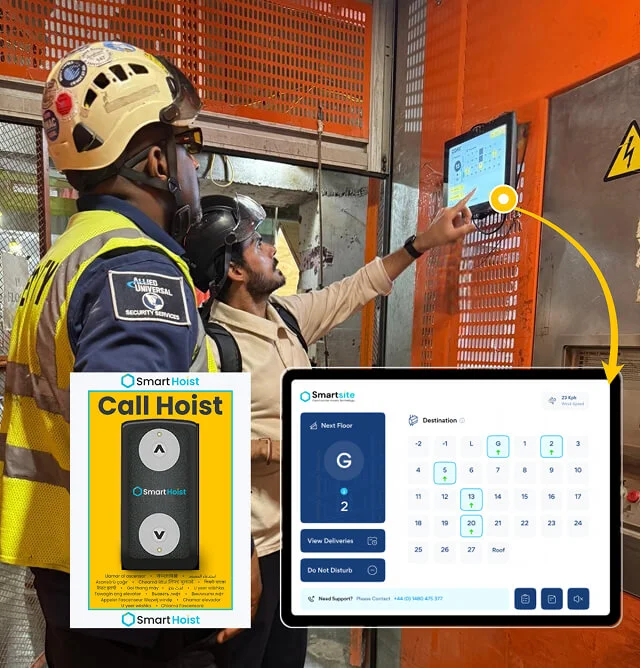
Coordinated hoist scheduling across shifts ensures material feeding aligns with crew deployment, reducing bottlenecks at critical work zones. The operational gain compounds over the duration of a project, as faster transit between levels preserves the momentum required by aggressive timelines. Developers who underestimate this efficiency risk accumulate delay costs that are difficult to recover later in the schedule.
Types of Construction Hoists and Equipment Options
Rack-and-pinion technology is the recognized industry standard for construction hoist mechanisms, offering consistent performance under variable load conditions and extended operational cycles. High-capacity material elevators are engineered to handle heavy structural components, while dedicated personnel cabs are designed to transport crews safely under applicable load ratings.
Variable frequency drives represent a meaningful advancement in ride quality, delivering smooth acceleration and precise leveling at every landing gate, thereby reducing mechanical stress and improving safety at entry points. UCEL partners with leading global manufacturers whose equipment carries certifications including ISO, ANSI, TUV, and CSA, ensuring that the equipment supplied meets recognized international safety benchmarks.
Advanced Considerations for Construction Elevator Compliance
Compliance for a construction hoist elevator is not a one-time checkpoint. It is an ongoing operational discipline. Recognized safety codes require routine inspections by competent personnel at defined intervals, and any lapse in this cadence creates measurable liability exposure for the general contractor. Equipment modifications, regardless of their apparent simplicity, must receive explicit written approval from the manufacturer before implementation. Unauthorized alterations void compliance status and can compromise structural integrity in ways that are not immediately visible. Clear load-control signage at every landing gate and rigorous access protocols prevent capacity overloads, which remain among the most preventable causes of hoist-related incidents on active sites.
Site Planning Resources for Construction Hoists
Effective site planning for construction hoists begins with detailed engineering drawings that account for mast placement, anchor tie-in spacing, and ground bearing capacity. Power consumption requirements must be evaluated early, as inadequate electrical infrastructure is a common source of commissioning delays. UCEL’s turnkey rental solutions include professional installation, drop testing, and ongoing maintenance support, removing the burden of coordinating multiple vendors across the project lifecycle. Procurement officers should review technical specification tables carefully, matching cab dimensions and rated capacity to the specific material and personnel demands of each project phase. Custom configurations are available for projects where standard equipment dimensions do not align with structural constraints.
Conclusion and Next Steps for Access Solutions
High-rise and complex construction projects require vertical access solutions that perform reliably under sustained operational pressure. Delays caused by inadequate or non-compliant construction hoists carry consequences that extend well beyond a single shift, affecting subcontractor schedules, safety records, and overall project delivery. UCEL Inc. brings decades of expertise, partnerships with certified global manufacturers, and a full range of rental and sales services to support developers at every stage of a project.
Equipment managers evaluating long-term rental contracts should engage early, as site assessment and engineering coordination require lead time that compressed schedules rarely recover. Requesting a customized site assessment is the most direct way to specify the right construction hoist configuration for your project’s needs.