
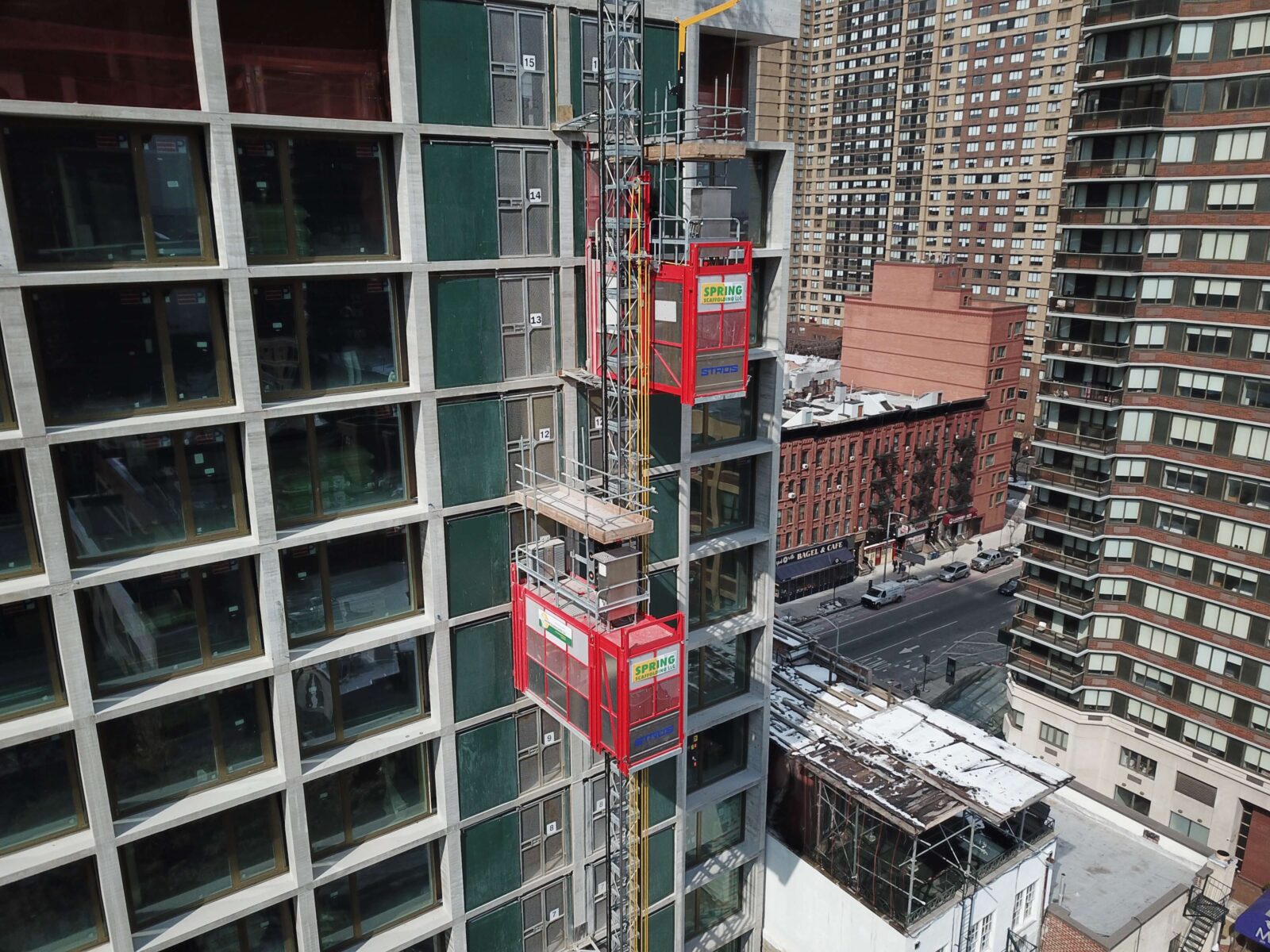
Vertical transport influences every phase of a build. When lifting systems operate efficiently, crews maintain momentum, and material flow remains consistent. When performance falters, delays spread quickly across trades. The engineering behind a construction elevator determines whether site operations stay on schedule or encounter repeated interruptions.
Reliability is not accidental. It results from deliberate design choices built to withstand heavy loads, demanding weather, and constant daily cycles. A properly engineered construction hoist elevator supports stable operation from foundation work through final structural stages.
Robust Rack and Pinion Drive System
A dependable construction hoist elevator often relies on a rack-and-pinion drive mechanism. This system uses a motor-driven gear that engages with a fixed rack mounted along the mast. Direct mechanical contact provides consistent lifting power without dependence on traction cables.
This design improves load control and maintains stable speed across varying heights. For demanding job sites across Canada and the USA, a well-built drive system reduces mechanical complexity and supports predictable performance during peak workload periods.
Structural Mast and Anchoring Stability
Mast integrity forms the backbone of any construction elevator. High-strength mast sections must resist wind loads, vibration, and continuous operational stress. Engineered tie-ins at specified intervals securely anchor the system to the building structure.
Improper anchoring increases the risk of misalignment and operational instability. A reliable construction hoist elevator includes reinforced mast connections and documented engineering calculations to ensure safe vertical travel even at extended heights. Structural stability protects both equipment longevity and worker safety.
Safety and Redundancy Mechanisms
Safety systems are essential components of a reliable construction elevator. Overspeed governors, emergency braking systems, overload sensors, and interlocked landing gates reduce risk during daily operation.
Redundant braking and fail-safe electrical controls ensure the construction hoist elevator responds immediately in the event of abnormal conditions. These features align with Canadian and U.S. safety standards and help prevent site shutdowns caused by compliance failures.
Capacity and Throughput Optimization
Efficient design considers not only the rated load but also the cycle frequency and car dimensions. A properly specified construction elevator must accommodate both material loads and workforce movement without creating congestion.
Optimized throughput reduces wait times during peak phases such as structural completion and façade installation. A high-performance construction hoist elevator provides steady vertical transport even when multiple trades require continuous access.
Serviceability and Maintenance Access
Ease of maintenance influences uptime. A thoughtfully engineered construction elevator provides accessible drive components, simplified lubrication points, and clear inspection pathways.
Routine servicing keeps the construction hoist elevator aligned with safety standards and operational demands. Designs that allow quick component replacement reduce downtime and prevent prolonged interruptions during critical project stages.
Design Determines Reliability
Site performance depends on engineered durability, structural integrity, and dependable safety systems. A poorly designed construction elevator can lead to downtime, inspection delays, and reduced productivity. Ignoring design quality during procurement risks long-term operational setbacks.
UCEL Inc. delivers advanced vertical transport solutions engineered for demanding job sites across Canada and the USA. From reinforced mast systems to optimized drive mechanisms, properly designed construction hoists protect productivity and regulatory compliance.
Do not allow design compromises to affect project outcomes. Contact UCEL Inc. today to secure a construction hoist elevator built for reliability, safety, and sustained performance.
Also read: Where to Rent Reliable Construction Elevators in Canada to Stay on Schedule