
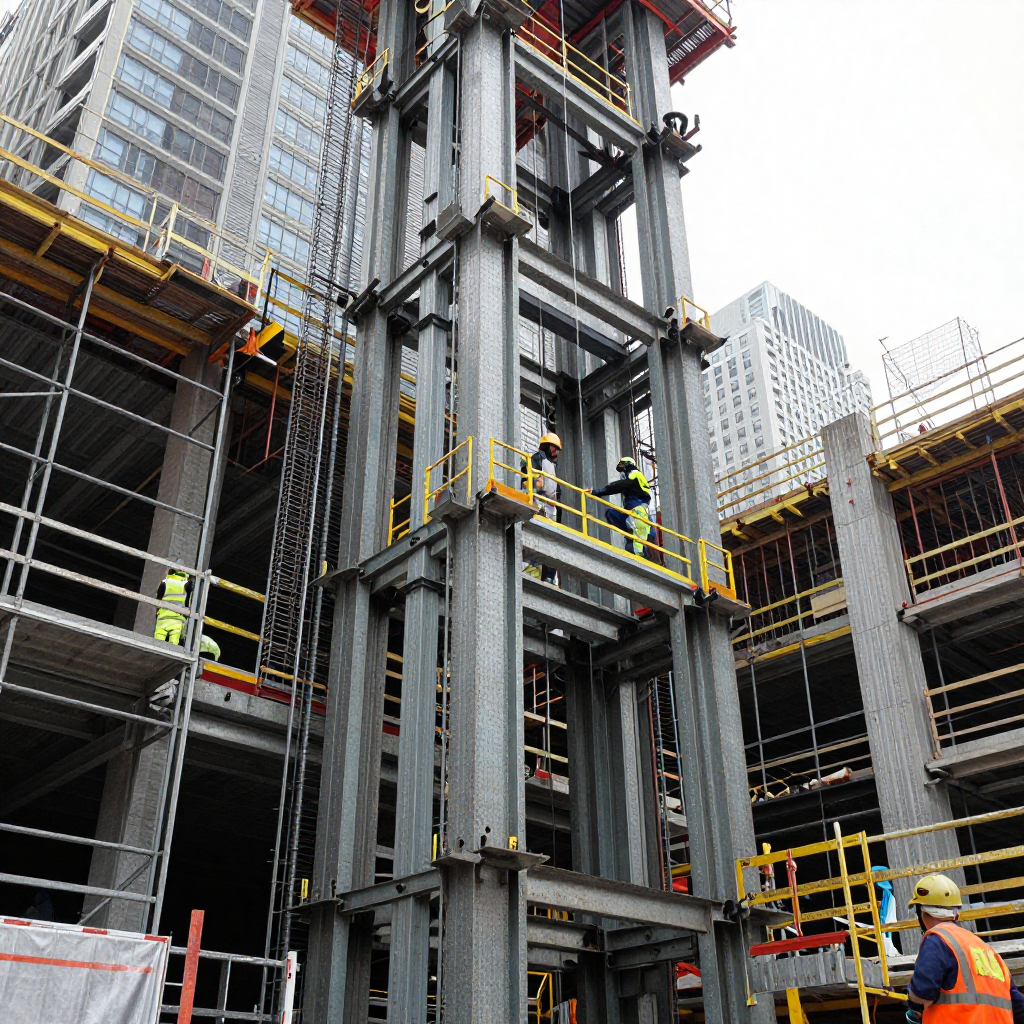
Large-scale construction projects depend on predictable vertical transport. Structural materials, façade panels, mechanical systems, and trade crews must move efficiently between levels to maintain workflow continuity. When lifting systems become congested or undersized, productivity slows, and delays cascade across the schedule. Careful planning during construction elevator rental directly influences daily output and milestone performance.
The decision between single-car and dual-car rack-and-pinion systems is more than a technical preference. It shapes throughput, labor efficiency, and long-term reliability. During a construction hoist rental evaluation, selecting the wrong configuration can quietly create bottlenecks that intensify as the project advances.
People Also Ask
What is the main difference between single-car and dual-car rack and pinion systems?
Single-car systems use one cage for all vertical transport, while dual-car systems operate two independent cages on the same mast to increase throughput and reduce congestion.
When should a dual-car system be selected over a single-car system?
Dual-car systems are recommended for high-rise projects, high workforce density, and compressed schedules that require consistent high-volume transport.
Understanding Single-Car Rack and Pinion Systems
Single-car rack-and-pinion systems consist of a single cage traveling along a mast, powered by a gear that engages a fixed rack. This direct mechanical drive delivers consistent lifting capability without relying on traction cables. For many mid-rise developments, a single cage provides sufficient capacity when workforce density and material volume remain moderate.
For construction elevator rentals, single-car systems are often chosen for projects with predictable traffic flow. Installation typically involves engineered mast sections secured at defined tie-in intervals along the building façade. Commissioning can proceed efficiently once structural anchoring points are in place.
Operationally, a single-car system performs reliably under balanced demand. However, its limitation is that it serves all traffic from a single cage. As building height increases or multiple trades require simultaneous access, wait times expand. Peak construction phases can expose throughput limitations that were not evident during early planning.
Understanding Dual-Car Rack and Pinion Systems
Dual-car systems incorporate two independent cages mounted on the same mast assembly. Each car operates independently, enabling parallel vertical motion. This configuration significantly increases throughput and reduces congestion during heavy traffic periods.
In construction hoist rental planning for high-rise or large workforce projects, dual-car systems provide operational flexibility. One cage can prioritize material transport while the other moves personnel. This separation improves efficiency and supports coordinated trade sequencing.
Engineering requirements are more detailed than those for single-car systems. Structural tie-ins must account for combined dynamic loads. Electrical systems must manage independent controls for each cage. Despite these additional considerations, dual-car systems often deliver better performance on projects with tight timelines and high daily traffic.
Capacity and Productivity Comparison
Capacity ratings alone do not determine operational success. Throughput, defined as the number of trips completed per hour and per daily load cycle, plays a decisive role. A single-car system may meet rated load requirements but struggle when traffic demand spikes.
Dual-car configurations increase effective lifting volume without doubling the mast footprint. During peak structural or façade phases, the difference becomes measurable. Reduced waiting periods allow crews to maintain workflow continuity.
Contractors evaluating construction elevator rental options should analyze projected peak demand rather than average usage. Traffic modeling during early planning identifies potential congestion points. During construction hoist rental, failing to anticipate peak activity can result in extended idle labor time and overtime costs.
A single-car system serving a high-density workforce may create daily bottlenecks that accumulate into measurable schedule delays. Dual-car systems often mitigate this risk by distributing traffic more effectively.
Cost vs Long-Term Performance
Initial rental costs often influence configuration decisions. Single-car systems generally require lower upfront expenditure during construction and elevator rental. For smaller projects, this approach may appear financially sound.
However, evaluating only short-term cost can obscure long-term impact. Productivity losses due to congestion may outweigh rental savings. An extended project duration increases overhead, site management costs, and labor expenditure.
Dual-car systems require greater rental investment during construction hoist rental, yet they often provide stronger schedule protection. Improved throughput reduces downtime and supports adherence to milestones. When considering lifecycle cost, performance reliability often carries greater financial weight than initial pricing differences.
Financial evaluation should include projected labor productivity, peak traffic frequency, and expected project duration. Selecting a lower-cost configuration that fails to meet demand can create cumulative financial strain.
When to Choose Each System
Single-car systems are appropriate for projects with moderate workforce density, limited height, and well-defined scheduling phases. Mid-rise developments with controlled material flow often operate effectively with one cage.
Dual-car systems are recommended for high-rise structures, large workforce concentrations, or projects operating under compressed timelines. When multiple trades require continuous vertical access, throughput capacity becomes critical.
When making elevator rental decisions during construction, decision-makers should evaluate workforce projections, material staging requirements, and expected height growth. In construction hoist rental planning, anticipating schedule acceleration or additional trade overlap strengthens configuration accuracy.
Selecting a system based solely on minimum requirements may leave little margin for unexpected demand. Strategic planning prioritizes scalability and consistent performance under pressure.
Configuration Determines Performance
Lift configuration is not a secondary equipment detail. It directly influences productivity, cost stability, and schedule reliability. A miscalculation during construction elevator rental planning can create persistent bottlenecks that intensify as the build progresses.
Choosing between single-car and dual-car systems requires careful evaluation of throughput demand, building height, and workforce density. Short-term savings from a lower-capacity configuration may lead to long-term performance challenges.
UCEL Inc. delivers engineered vertical transport systems designed to meet the demands of complex projects across Canada and the USA. From configuration planning to installation support, properly specified systems protect operational efficiency.
Do not allow capacity limitations to undermine project momentum. Partner with UCEL Inc. to select a high-performance rack and pinion lift solution aligned with real-world site conditions. Contact UCEL Inc. today to secure reliable vertical transport that safeguards timelines and productivity from start to completion.
Also read: How Rack and Pinion Elevators & Lifts Work