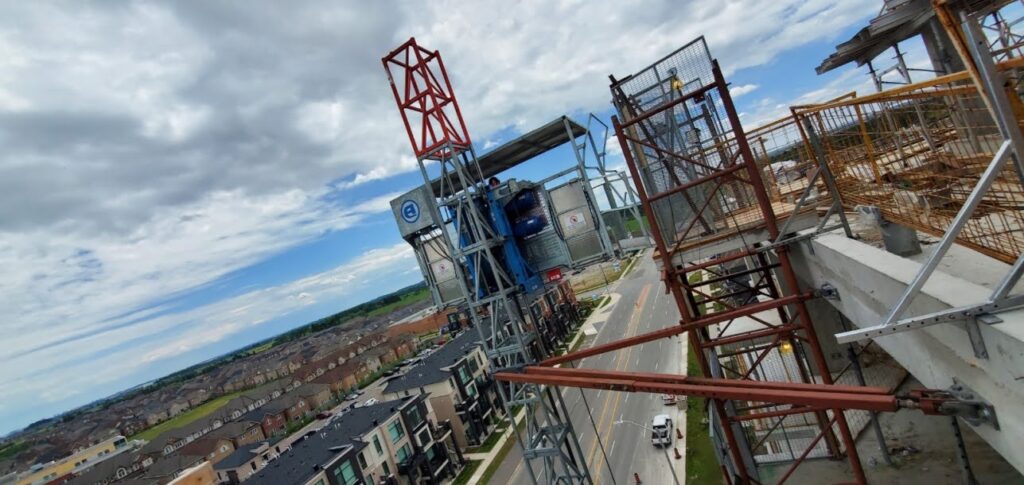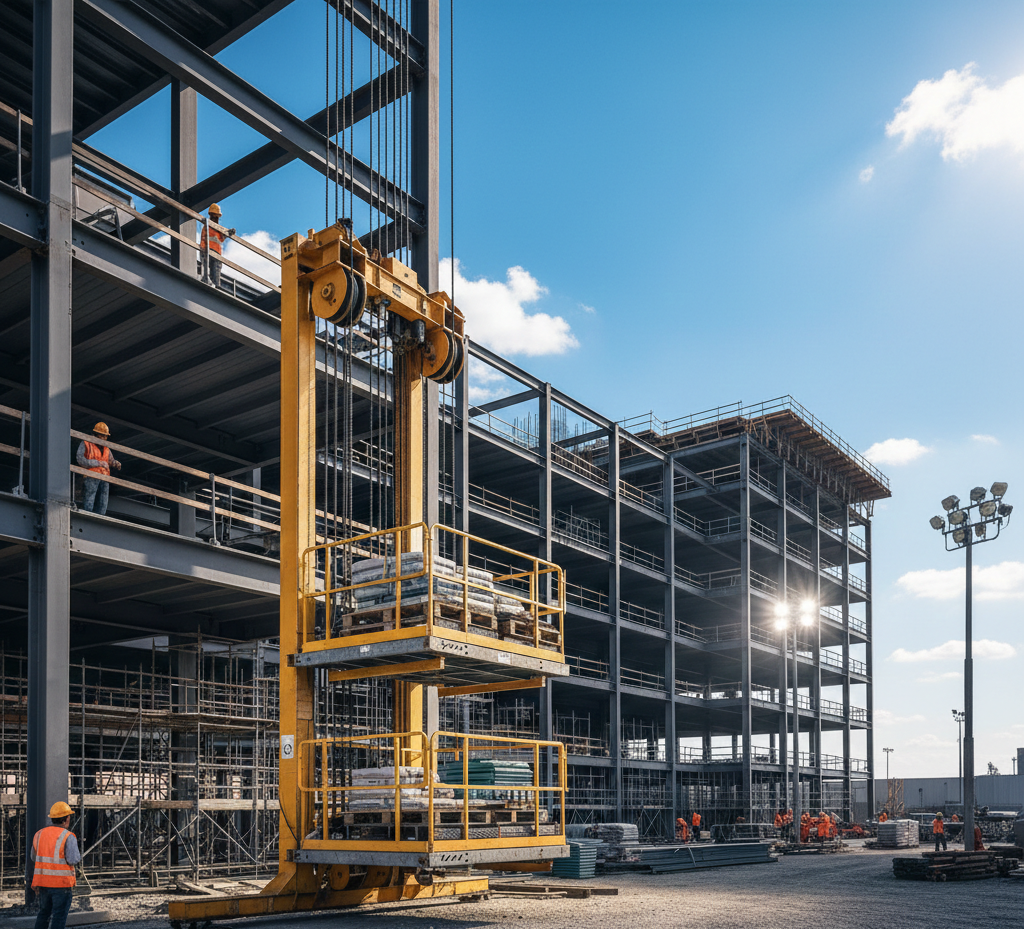

Many industrial elevators do not run inside a building shaft. Instead, they travel along a mast attached to the outside of a silo, chimney, tower, or crane. That arrangement enables powered access on structures never designed for an elevator, but it also makes the connection between the mast and structure central to the whole installation. Mast-mounted installation is one of the configuration options outlined in Industrial Elevator Lift Systems: Types, Applications, and Planning Considerations, and it applies to everything from silo access to crane cab elevators.
This blog explains what the industrial elevator mast does, how ties transfer loads to the host structure, how different structures are approached, and why an engineering review is always required. It does not provide tie spacing or load figures, because those depend on the manufacturer, the structure, and the engineer.
What the Mast Does in an Industrial Elevator System
The mast is the vertical (or inclined) track the car travels along. In a rack-and-pinion elevator, the mast carries the rack that the car’s pinions engage, along with guide surfaces that keep the car aligned. It is built from modular industrial lift tower sections bolted together to reach the required travel height. This self-climbing arrangement is the main reason mast-mounted systems suit structures without a hoistway, a point compared in detail in Rack and Pinion vs Traction Elevators for Industrial Facilities.
The mast also carries loads. The weight of the car, its contents, and the mast itself, along with dynamic forces from starting, stopping, and safety gear engagement, and environmental loads such as wind, all pass through the mast. A free-standing mast can only reach a limited height, so beyond that point the mast must be tied to a supporting structure.
How Mast Ties Transfer Loads to the Host Structure
An elevator mast tie-in connects the mast to the host structure at intervals along its height. Ties keep the mast stable and transfer horizontal forces from wind, eccentric loads, and the car’s operation into the structure. Vertical loads are generally carried down through the mast to its base.
The tie design depends on the equipment, the distance between the mast and the structure, the forces involved, and the type of anchorage the structure can accept. The manufacturer’s requirements and the project engineer set the number, spacing, and details of ties, and the anchorage points must be able to resist the loads delivered to them.
Tying Into Silos, Chimneys, Towers, and Crane Structures
Each structure type brings its own considerations:
- Silos: Assess concrete or steel walls for their ability to accept tie loads, and ensure anchorage does not compromise the wall or its lining.
- Chimneys and stacks: Slender, exposed structures may have tapering profiles, thermal movement, and existing ladders or platforms that affect mast position and tie design.
- Process towers: Pipe racks, platforms, and equipment can limit where ties are placed and where the car can travel.
- Crane structures: Port and tower cranes involve steel members, movement, and vibration, so ties must suit the crane’s structure and operating conditions.
In every case, the condition of the existing structure matters. Corrosion, cracking, or past modifications can affect where and how ties are installed.
Access for installation also differs by structure. Crews may need temporary platforms, rope access, or crane support to install the first ties, and work on operating structures may need to be coordinated with process conditions, hot work permits, or shutdown windows. Planning these practical details with the facility’s operations and safety teams helps the erection sequence proceed as designed.
Configurations for Structures That Do Not Suit a Standard Mast
Several configurations help where a straight, symmetrical mast does not fit:
- Inclined: The mast follows an angle to suit sloped or tapered structures. Sloped terrain and the type of load usually decide whether an incline is needed.
- Reverted: The arrangement adapts where the structure’s profile changes along its height.
- Asymmetrical: The car is offset from the mast to clear obstructions or align with landings.
- Reduced size tower sections: Smaller mast sections suit tight clearances or limited space.
- Self-erecting systems: The equipment raises its own mast sections, which can reduce crane dependence during installation.
The right configuration depends on the structure, landing positions, and engineering review.
Landings, Gates, and Access at Each Level
Every stop needs a safe interface between the car and the work area. Landing platforms must align with the car, and gates control access so workers cannot reach the mast path when the car is not present. A ground enclosure typically surrounds the base.
Landing design must also suit the people and materials using each level. A landing serving an inspection platform may need access for only one or two workers, while a landing serving a conveyor gallery or equipment deck may need space for carts, parts, and tools. Side gates can allow oversized items to be loaded where the main entrance is too narrow.
Select gate styles, interlocks, and enclosure arrangements for the structure and the users. UCEL Inc. offers landing gates and hoistway enclosures in several configurations for industrial elevators, construction hoists, and transport platforms.
Engineering Review of the Host Structure
Before installing any mast, a qualified engineer should review the host structure. The review typically considers the structure’s capacity to accept tie loads, its condition, anchorage methods, foundation or base support for the mast, and any effects on existing linings, coatings, or equipment.
The review produces the basis for tie locations and details, and it may identify reinforcement or alternative configurations. It also supports the documentation that permitting authorities may require. Skipping or shortening this step creates risk that cannot be corrected easily once the mast is in place. The review is not a one-time event: if the structure is modified or the elevator is relocated, reassess the tie arrangement.
Conclusion
An industrial elevator mast carries the car and transfers loads into the host structure through engineered ties. Silos, stacks, towers, and cranes each present different challenges, and configurations such as inclined, asymmetrical, and reduced-size sections help adapt the system to the structure. Engineering review ties it all together.
Mast erection and tie installation are one stage in a longer sequence that runs from site assessment to planned maintenance, set out in The Industrial Elevator Project Lifecycle From Site Assessment to Planned Maintenance. Contact UCEL Inc. to discuss your structure.
Frequently Asked Questions
Can an elevator mast be relocated to another structure?
Mast-mounted systems can sometimes be relocated, but the new structure needs its own engineering review and tie design before installation.
Can mast ties affect the host structure?
Ties transfer loads into the structure, so anchorage must suit the structure's material, condition, and any linings or coatings. The engineering review addresses these effects.
Do mast ties need to be inspected?
Yes. Mast sections, ties, and anchorages should be part of the inspection and maintenance program, following the manufacturer's instructions and applicable requirements.
People Also Ask
How is an industrial elevator attached to a silo?
The elevator’s mast is tied to the silo wall at intervals using engineered ties and anchorage. The manufacturer’s requirements and a qualified engineer set tie locations and details after reviewing the silo.
How far apart are elevator mast ties?
Tie spacing depends on the equipment, the forces involved, and the host structure. The manufacturer and project engineer set it rather than a single standard figure.
Can an elevator mast be installed on an existing chimney or stack?
Often, yes, subject to an engineering review of the structure’s capacity, condition, and profile. Inclined or reduced size configurations may be needed.