
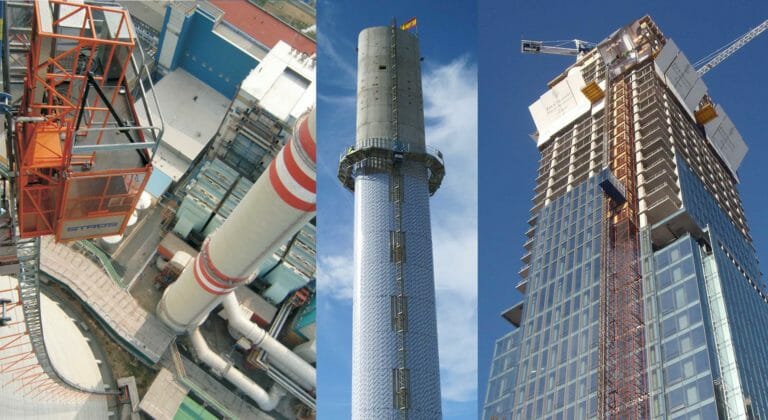
Industrial sites have vertical access problems that ordinary buildings do not. Maintenance crews climb ladders on stacks and silos. Tools and parts travel up crane towers by hand line. Personnel at refineries and chemical plants need access to elevated platforms in areas where electrical equipment must be suitable for hazardous atmospheres. In each case, slow or unsafe access costs time, extends shutdowns, and increases fatigue among the workforce.
An industrial elevator lift addresses those problems by providing powered vertical access designed around the structure and the operating environment. Choosing the right system, however, means understanding how industrial elevators differ from building elevators, which types suit which applications, and what must be planned before installation.
This guide is written for plant managers, maintenance and engineering teams, industrial project owners, and contractors. It covers the main types of industrial lifts, where they are used, typical performance ranges, configuration and environmental options, drive and power systems, buying and renting, project planning, standards, and long-term maintenance.
How to Specify the Right Industrial Elevator Lift for Your Site
Specify an industrial elevator from the site outward: the structure it will serve, the loads and people it will carry, how often it will run, the available power, the hazardous area classification, the climate, and the jurisdiction’s inspection requirements. Getting those inputs right early leads to equipment that fits the facility and avoids costly redesign later.
What an Industrial Elevator Lift Is and How It Differs From Passenger and Freight Elevators
An industrial elevator lift is a powered vertical transportation system designed to move authorized workers, equipment, and materials on industrial structures and work sites. It is not intended for the general public. Many industrial units travel on a mast attached to the host structure rather than inside an enclosed building hoistway, which allows them to serve silos, chimneys, towers, crane structures, and process units.
The key differences from passenger and freight elevators include:
- Users: Passenger elevators serve the public. Industrial elevators serve trained workers and authorized users at a facility or site.
- Installation: Building elevators usually run in a dedicated hoistway with a machine room or machine space. Many industrial elevators are mounted externally on a mast tied to the structure.
- Environment: Industrial units may be exposed to weather, dust, corrosive chemicals, extreme temperatures, or hazardous atmospheres, so materials, enclosures, and electrical components must suit those conditions.
- Duty profile: Industrial use can involve heavy, awkward loads and continuous operation during shutdowns or long idle periods between maintenance campaigns.
- Configuration: Industrial systems are often customized for travel height, landing locations, structural tie points, and site constraints.
Industrial elevators also differ from temporary construction hoists, which are installed for a building’s construction period and removed once permanent vertical transportation takes over. Some industrial elevators are permanent installations, while others serve temporary projects such as plant turnarounds or construction at an industrial facility.
Types of Industrial Elevators and Industrial Lifts
Industrial lifts cover a range of equipment designed for different users, loads, and environments. The main categories include the following.
Personnel and Material Lifts
Personnel and material lifts carry both workers and their tools, parts, and materials within the limits set by the manufacturer. They are common where crews and supplies need to reach the same elevated work areas, such as process structures, boiler houses, or tall storage facilities. When the primary need is moving workers, personnel hoists provide dedicated access designed to carry people.
Material Elevators
Material elevators focus on moving goods, equipment, and supplies. A material handling lift can reduce manual carrying on stairs and ladders and limit reliance on cranes for routine loads. Material units should carry personnel only if they are specifically designed, configured, and approved for that use.
Service Elevators
Service elevators provide access for maintenance, inspection, and operations staff to equipment and areas that need regular attention. They are often found on structures where workers need repeated access to elevated platforms, machinery, or monitoring points.
Explosion-Proof Hoists and Elevators
Facilities that handle flammable gases, vapors, or combustible dusts may require equipment suitable for hazardous locations. Explosion-proof hoists and elevators are designed with electrical and mechanical components intended to reduce ignition risk in classified areas. The equipment must match the facility’s hazardous area classification, which is covered later in this guide.
Temporary Construction Elevators
A temporary construction elevator provides access during construction, expansion, or major maintenance work at an industrial site. It is installed for a defined period and removed once the work is complete, making it suitable for turnarounds, capital projects, and structures that do not need permanent elevator access.
Single Man Lifts
A single man lift is a compact personnel lift designed to carry one worker, often with tools, to elevated work points. It suits structures where space is limited and individual maintenance or inspection personnel need access rather than crews or bulk materials.
Industries and Structures Where Industrial Lifts Are Used
Industrial elevators support vertical access wherever height, structure type, or operating conditions make stairs, ladders, or temporary access inefficient. Common applications include:
- Oil and gas refineries: Access to process units, columns, heaters, and elevated platforms, often in classified hazardous areas.
- Chemical plants: Vertical access in facilities where corrosive substances or flammable atmospheres affect equipment selection.
- Port cranes: Access to operator cabs and machinery houses on ship-to-shore and other large cranes.
- Aggregates and cement: Access to silos, preheater towers, kilns, and conveyors in dusty and abrasive environments.
- Power generation: Access to boilers, stacks, chimneys, and turbine structures for inspection and maintenance.
- Steel: Access to blast furnaces, mills, and elevated equipment in high-heat environments.
- Mining: Access to headframes, processing plants, and storage structures.
- Tower cranes: Access for operators and maintenance crews to the cab and upper structure.
Each application brings its own combination of structure, environment, and duty cycle, which is why industrial elevator projects usually begin with a site assessment rather than a catalog selection.
The industry also shapes who uses the elevator and how. At a refinery or chemical plant, users may include operations staff, contractors brought in for a turnaround, and inspection specialists, each with different access needs and training. At a port, crane operators may ride the elevator several times per shift, while maintenance crews use it with tools and spare parts. In cement and aggregates, an elevator may sit idle for long periods and then run continuously during a kiln or preheater shutdown. Understanding these usage patterns early helps the supplier recommend equipment, controls, and maintenance plans that match how the facility actually operates.
Typical Capacity, Speed, and Car Size Ranges
Capacity, speed, and car size vary widely across industrial elevator models. Popular models range from 880 lbs to 7,000 lbs, with travel speeds of 150 feet per minute. Custom builds can reach capacities of up to 16,000 lbs and speeds of up to 300 feet per minute. Car sizes vary by model and can be configured to suit the loads and number of workers the system must carry.
The right combination depends on the heaviest and largest loads, the number of workers per trip, travel height, and how quickly the site needs each trip to be completed. Once loads and trip counts are known, capacity, speed, and dimensions can be matched to the facility.
Configuration Options for Difficult Sites
Many industrial structures do not suit a standard vertical mast. Configuration options allow industrial lifts to serve sites with unusual geometry, limited space or access constraints:
- Inclined: The mast follows an angle, which suits sloped structures, chimneys with tapered profiles, or terrain that rules out a vertical installation.
- Reverted: The mast and car arrangement can be adapted where the structure’s profile changes along its height.
- Asymmetrical: The car is offset from the mast to accommodate obstructions, clearances, or landing positions that don’t align with a symmetrical layout.
- Mobile platform: Equipment can be mounted on a mobile base for applications that require repositioning.
- Self-erecting: The system can raise its own mast sections during installation, reducing reliance on cranes at sites where crane access is limited.
- Reduced size tower sections: Smaller mast sections suit structures with limited space or tight clearances.
The suitability of each option depends on the structure, the loads involved, and an engineering review. Each option changes how loads reach the host structure, which is why tie design and engineering review are central to How Industrial Elevator Masts Are Anchored to Silos, Stacks, and Plant Structures.
Operating in Hazardous, Corrosive, and Extreme Temperature Environments
The operating environment often influences equipment selection as much as load or travel height.
Hazardous Locations
Explosion-proofing is available up to Class 1, Division 2. The required protection depends on the hazardous area classification established for the specific location where the elevator will operate. Facility owners should confirm this classification before requesting equipment, because different areas of the same plant can carry different classifications.
Enclosure Ratings
NEMA and ATEX options are available for electrical enclosures and components. The appropriate rating depends on the facility’s location, the applicable standards, and the exposure conditions at the installation point.
Extreme Cold
Equipment can be specified for operation down to -40°C, which is relevant for outdoor installations in Canadian climates, mining operations, and exposed structures such as port cranes and stacks.
Abrasive and Corrosive Environments
Cement, aggregates, mining, and chemical processing can expose equipment to abrasive dust, moisture, and corrosive substances. Material selection, coatings, sealing, and enclosure choices should reflect those conditions to support reliable operation and reasonable maintenance intervals.
Drive Systems Used in Industrial Elevators
Three drive types are most commonly discussed for industrial applications:
- Rack and pinion: A motor-driven pinion engages a rack fixed to the mast. Because the system climbs its own mast, a rack-and-pinion elevator can be mounted externally on structures without a hoistway, making it common on silos, stacks, cranes, and retrofits.
- Traction: Hoist ropes run over a driven sheave, usually with a counterweight. Traction elevators typically operate within an enclosed hoistway and suit buildings with frequent traffic.
- Hydraulic: A hydraulic cylinder raises the car. Hydraulic systems are generally associated with lower travel heights.
The right drive depends on the structure, travel height, environment, and how the facility will maintain the equipment. Shaft requirements, outdoor exposure, and adaptability to travel height changes are the main points of difference in Rack and Pinion vs Traction Elevators for Industrial Facilities.
Power Supply, Controls, and Remote Monitoring
Power and control systems affect both installation planning and daily operation. Variable frequency drives (VFDs) control motor speed for smoother starts and stops and can help manage electrical demand during acceleration. Battery power options are available for sites where a permanent supply is limited or unavailable. Remote monitoring lets operators and maintenance teams track equipment status and respond to faults faster.
Each model has its own electrical requirements, including full load and starting current, and voltage and phase depend on the model and site. Confirming power availability at the installation point is one of the earliest planning steps. Full load and starting current, VFD behaviour, and battery options are explained with model examples in Industrial Elevator Power and Electrical Requirements Explained.
Buying, Renting, or Customizing an Industrial Elevator
The right acquisition approach depends on how long the facility needs vertical access and how closely standard equipment matches the site.
Buying
Purchasing usually suits permanent access needs, such as an elevator serving a silo, stack, or process structure for years. Ownership brings direct control over the equipment, along with responsibility for maintenance, inspections, and life cycle planning.
Renting
Renting can suit temporary needs, such as a plant turnaround, a capital project, or construction at an industrial facility. Teams evaluating short-term access can review construction lift rental options and confirm what the arrangement includes, such as installation, inspections, maintenance, and dismantling.
Customizing
When standard models do not fit the structure, loads, or environment, a custom configuration may be required. Customization can involve capacity, speed, car size, mast arrangement, hazardous location components, or cold-weather specifications. Custom work generally requires more engineering input and lead time, so identify it early.
Neither buying nor renting is automatically more economical. Duration, utilization, maintenance responsibility, and downtime costs should guide the decision.
Useful questions at this stage include: How many years will the facility need access at this location? Will the elevator be relocated to other structures later? Who will be responsible for inspections and maintenance? What would an unplanned outage cost in lost production or delayed maintenance? Clear answers make it easier to compare a purchase, a rental, and a custom build on practical terms rather than on initial cost alone.
Planning an Industrial Elevator Project
A successful industrial elevator project starts well before you select equipment. Key planning areas include:
- Site assessment: Review the structure, travel height, landing locations, ground conditions, delivery and installation access, and environmental exposure.
- Structural ties: Identify where the mast can tie to the host structure and confirm the structure can accept the loads. This requires review by qualified engineers.
- Landings: Plan where the elevator will stop, how workers and materials will move from the car to work areas, and what gates and enclosures are required.
- Engineering and permitting: Prepare layout drawings, engineering documentation, and the submissions required by the authority having jurisdiction.
Facilities can speed up the process by gathering site and operating information before requesting pricing. The structure, travel height, duty cycle, power supply, and hazardous area classification are the core inputs listed in Site and Operating Details to Prepare Before Requesting an Industrial Elevator Quote. Engineering, permitting, installation, inspection, and maintenance all follow from these early decisions, as set out in The Industrial Elevator Project Lifecycle From Site Assessment to Planned Maintenance.
Timelines also deserve early attention. Engineering review, custom configurations, permitting, and delivery can each affect when an elevator is available, and installation at an operating plant may need to fit within a planned shutdown window. Coordinating these steps with the facility’s maintenance schedule helps avoid situations where the structure is ready, but the equipment, approvals, or crews are not. UCEL Inc. supports this stage with in-house, engineer-stamped drawings and in-house submissions and permitting, keeping engineering and approvals connected to the equipment being supplied.
Safety Standards, Inspections, and Jurisdictional Requirements
Industrial elevators are subject to safety standards and regulations that vary by equipment type and location. In Canada, CSA standards apply to elevating devices and are enforced through provincial regulators; in Ontario, for example, elevating devices fall under the Technical Standards and Safety Authority (TSSA). In the United States, ANSI standards and OSHA regulations are among the relevant references, along with state and local requirements.
Inspection and approval requirements vary by jurisdiction and by the authority having jurisdiction for the specific installation. Requirements can differ for permanent elevators, temporary installations, and equipment in hazardous locations. Facility owners should confirm which standards, inspections, and permits apply before installation and plan for acceptance inspections and ongoing periodic inspections as required.
Compliance with one standard does not automatically satisfy every regulatory requirement. Confirm equipment certifications, installation approvals, and operating permits for the specific project.
Common Mistakes When Specifying Industrial Lifts
Several recurring mistakes lead to equipment that underperforms or requires costly changes:
- Underestimating duty cycle: A unit sized for occasional use may struggle during shutdowns or campaigns with continuous trips. Estimate peak trips per shift, not only average use.
- Ignoring hazardous area classification: Specifying equipment before the classification is confirmed can result in unsuitable electrical components or late redesign.
- Overlooking power supply: Available voltage, capacity, and distance to the installation point can affect equipment selection and installation cost.
- Not planning landings and access: Landings that don’t connect to work platforms, or that lack suitable gates and enclosures, limit the elevator’s value and can create access issues.
Most of these mistakes come from incomplete information at the start of the project, which is why early site and operating data collection matters.
Another frequent issue is treating the elevator as an isolated purchase rather than part of the facility’s access plan. Elevators interact with platforms, walkways, stairs, lighting, communication systems, and emergency procedures. Reviewing how workers will reach the ground-level entrance, how they will move from landings to work points, and how rescue or evacuation would work keeps the installation integrated with the rest of the site.
Maintaining Industrial Elevators Over Their Service Life
Industrial elevators operate in demanding conditions, and their reliability depends on consistent maintenance. A planned maintenance program typically covers routine inspections, lubrication, wear-part replacement, safety-device testing, and recordkeeping, following the manufacturer’s instructions and applicable requirements.
For permanent installations, custom maintenance contracts and life cycle planned maintenance scheduling help facility teams anticipate major component replacements instead of reacting to failures. UCEL Inc. offers service and maintenance plans for traction, hydraulic, and rack-and-pinion elevators. Over time, owners may also need to evaluate upgrades, such as control or drive modernization, or plan replacements for aging equipment.
Daily operation matters as much as scheduled service. Trained operators should complete the pre-use checks set out by the manufacturer and site procedures, report unusual noise, vibration, or control behavior, and keep landings, gates, and enclosures in good condition. Harsh environments may require more frequent attention to components exposed to dust, moisture, corrosive substances, or extreme cold. Maintenance records also support inspections and help owners decide when repair, modernization or replacement offers better long-term value. Locked-in contract pricing on maintenance agreements can help facilities budget for this work over multiple years.
Conclusion
An industrial elevator lift is one of the most site-specific pieces of equipment a facility can specify. The right system reflects the structure, loads, duty cycle, power, environment, and regulatory requirements of the location, and it remains reliable only with planned maintenance over its service life.
With a heritage dating to 1963, UCEL Inc. supports industrial clients from site assessment and engineering through installation and maintenance. To discuss vertical access for a refinery, plant, silo, stack, crane, or other industrial structure, contact UCEL Inc. to review your project requirements.
Frequently Asked Questions
2. Can an aging manlift be replaced with an industrial elevator?
In many cases, yes. Replacement depends on the structure, available space, travel height, power supply, and landing locations, so an engineering assessment of the existing installation is the first step.
3. Do industrial elevators need periodic inspections?
Yes. Industrial elevators require inspections at installation and during their service life. The frequency and scope of inspections depend on the jurisdiction, the authority having jurisdiction, and the equipment type.
4. Can an industrial elevator be installed on an existing structure without a shaft?
Often, yes. Mast-mounted systems, such as rack-and-pinion elevators, can be tied to existing structures like silos, stacks, and towers without an enclosed hoistway, subject to an engineering review of the host structure.
5. Are industrial elevators available for hazardous locations?
Yes. Explosion proofing is available up to Class 1, Division 2, with NEMA and ATEX options. The equipment must match the hazardous area classification of the specific location where it will operate.