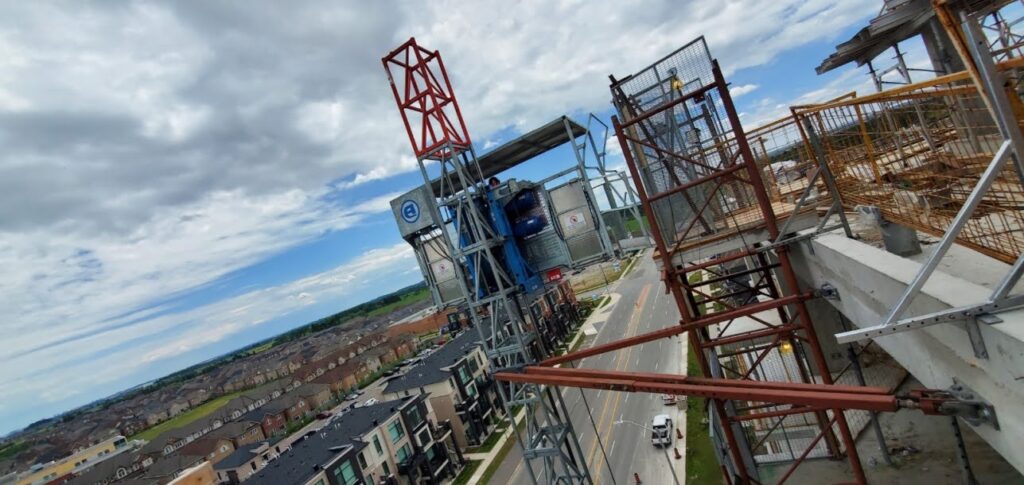
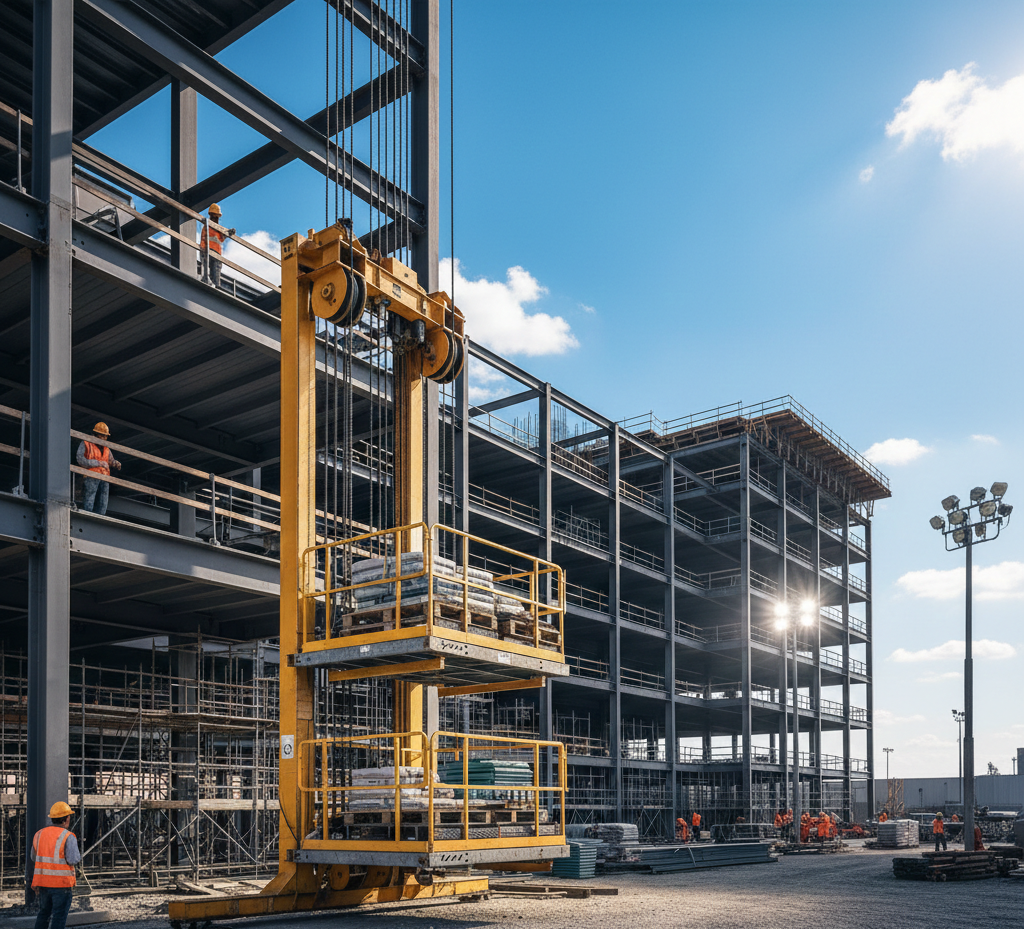
When a facility requests an industrial elevator quote with only a structure name and an approximate height, the supplier has to make assumptions. Those assumptions lead to follow-up questions, revised proposals, and sometimes equipment changes late in the project. A complete information package at the start shortens that cycle and produces a quote that reflects the actual site. As Industrial Elevator Lift Systems: Types, Applications, and Planning Considerations explains, every system is configured around its host structure, duty cycle, and operating environment, so a quote’s accuracy depends on the information behind it.
The details below focus on project scoping. They clearly define industrial lift requirements so a supplier can recommend a configuration, identify engineering needs, and plan installation. Once these details are defined, you can match capacity, speed, and car dimensions to the site.
The Structure the Elevator Will Serve and Available Tie Points
Start with the host structure. Is it a silo, chimney, stack, process tower, crane, boiler house, or building? Many industrial elevators run on a mast tied to the structure, so the supplier needs to understand what the mast will connect to.
Useful information includes structural drawings, photos from several angles, the structure’s material and condition, and any known locations where ties could be attached. Note obstructions such as pipe racks, ladders, platforms, and cladding. The supplier and a qualified engineer will still review the structure, but early information helps identify suitable configurations and any required engineering work.
Travel Height and Number of Landings
Provide the total travel height from the lowest landing to the highest, along with the elevation of each stop. List every level that needs access, even if some will be used only occasionally.
Describe what sits at each landing: a platform, a doorway, an equipment deck, or open structure. This affects landing gates, enclosures, and how users will move from the car to the work area. If future landings may be added, mention that as well.
Typical Loads, Load Dimensions, and Whether Personnel Will Ride
Describe what the elevator will carry in practical terms. Typical examples include crews with hand tools, replacement parts, motors, filter bags, refractory materials, or drums. Include the largest and heaviest items expected, not just everyday loads.
Most importantly, state whether personnel will ride. Equipment intended to carry workers must be designed, configured, and approved for that use. A material-only requirement and a personnel-and-material requirement can lead to very different recommendations.
It also helps to note how loads will be handled at each end of the trip, such as with carts, pallet jacks, or hand carry, since handling methods affect the car door and landing arrangement.
Expected Trips per Shift and Duty Cycle
Duty cycle is one of the most frequently underestimated requirements for industrial lifts. An elevator that makes a few trips a day during normal operations may need to run almost continuously during a shutdown or turnaround.
Estimate trips per shift under normal operation and at peak, the number of shifts per day, and whether the elevator will see seasonal or campaign-based use. This information influences drive selection, motor sizing, and maintenance planning.
If the facility has records from an existing manlift, stair counts, or past turnaround schedules, include them. Real usage data is more reliable than estimates.
Available Power Supply at the Installation Point
Confirm what electrical supply is available near the base of the elevator, including voltage, phase, available capacity, and the distance from the nearest suitable source. If power is limited or unavailable, say so, because some options, such as battery power, may be worth discussing.
Electrical requirements vary by model, so coordinating with the supplier and electrical contractor is essential. Full load and starting current vary by model, and how they affect supply sizing is explained in Industrial Elevator Power and Electrical Requirements Explained.
Hazardous Area Classification and Chemical or Dust Exposure
If the elevator will operate in a classified hazardous location, provide the classification for the specific area where the equipment will be installed. Different areas of the same plant can have different classifications, so a facility-wide assumption is not enough.
Also note exposure to corrosive chemicals, combustible or abrasive dust, moisture, and washdown. These conditions affect electrical enclosures, materials, and coatings, and can significantly change the equipment recommendation.
Ambient Temperature Range and Weather Exposure
Provide the expected temperature range at the installation, including winter lows and summer highs, along with any local heat sources such as kilns, furnaces, or boilers. Indicate whether the elevator will be fully exposed to weather, partially sheltered, or indoors.
Wind exposure, snow and ice, and salt air at coastal or port sites also affect equipment specification and maintenance planning.
Installation Access, Crane Availability, and Project Timeline
Describe how equipment will reach the base of the structure. Note access roads, gate restrictions, ground conditions, overhead obstructions, and laydown space. State whether a crane will be available during installation, since some configurations can reduce crane dependence while others rely on it.
Share the target timeline, including any planned shutdown windows, permit lead times, and dates when the structure will be accessible. Good industrial elevator project planning aligns equipment delivery and installation with these windows rather than discovering conflicts later.
Whether the Elevator Will Be Permanent, Temporary, or Rented
Explain how long access is needed. A permanent elevator serving a silo for decades involves different considerations than temporary access for a turnaround or a capital project. Permanent installations bring long-term maintenance, inspection, and life cycle planning. Temporary needs may suit construction lift rental, with installation and removal planned around the project schedule.
If the facility is open to either buying or renting, say so. That gives the supplier room to compare options against the project’s duration and budget.
Conclusion
A well-prepared request turns an industrial elevator quote into a practical project proposal instead of a starting point for revisions. Collecting structural, operating, electrical, environmental, and scheduling details up front helps the supplier recommend suitable equipment and identify engineering, permitting, and installation needs early. The same information then carries through engineering, permitting, installation, and maintenance, as shown in The Industrial Elevator Project Lifecycle From Site Assessment to Planned Maintenance.
Ready to scope an industrial elevator lift for your facility? Contact UCEL Inc. to review your site and operating requirements.
Frequently Asked Questions
Should I include structural drawings with a quote request?
Yes, if they are available. Drawings and photos of the host structure help the supplier assess tie points, mast position, and landing locations, although a qualified engineer will still review the structure.
What happens if my requirements change after receiving a quote?
Share the changes with the supplier as early as possible. Changes to loads, travel height, landings, power, or hazardous area classification can affect both the equipment recommendation and the price.
Does an industrial elevator quote include installation and permitting?
Scope varies by supplier and project. Confirm whether engineering, permitting, delivery, installation, inspection support, and maintenance are included, and ask for any exclusions in writing.
People Also Ask
What information do I need for an industrial elevator quote?
Suppliers typically need details about the host structure and tie points, travel height and landings, loads and personnel use, duty cycle, power supply, hazardous area classification, climate, installation access, timeline, and whether the installation is permanent or temporary.
Why does duty cycle matter when quoting an industrial lift?
Duty cycle affects drive selection, motor sizing, and maintenance planning. An elevator expected to run continuously during shutdowns needs a different specification than one used only occasionally.
Do I need a hazardous area classification before requesting a quote?
If the elevator will operate in a hazardous location, yes. The classification for the specific installation area determines the electrical protection the equipment must have.