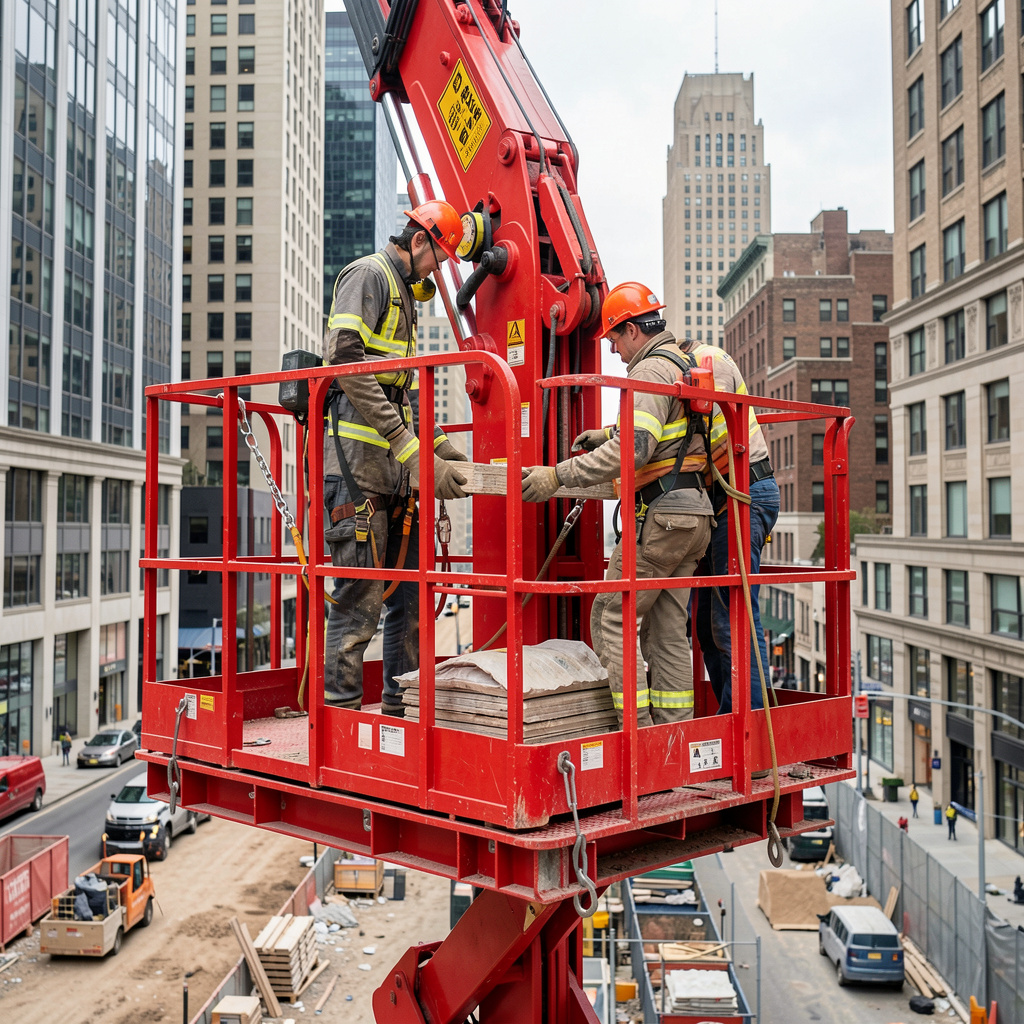
Vertical transportation delays on high-rise construction sites carry a cost that compounds quickly, with stalled material deliveries, idle crews, and compressed finishing schedules that erode project margins before a building is ever occupied. Multilift construction elevators address this directly by providing modular, scalable vertical access that keeps pace with structural progression rather than lagging behind it. For developers managing complex commercial builds, the difference between a reactive hoisting strategy and a purpose-built hoist system is measurable in schedule certainty and workforce productivity. Upgrading to advanced hoist systems is not a luxury; it is a logistical decision with direct safety and operational consequences.
People Also Ask
What are the advantages of rack and pinion elevators on construction sites?
Rack-and-pinion construction elevators provide consistent lifting power, high load capacity, and stable operation without relying on traction cables, which makes them well-suited for high-rise construction work in Canada and the U.S.
How early should rack and pinion elevators be planned in a project?
Planning should start during structural design so anchoring/tie-ins, load alignment, and compliance requirements can be coordinated before installation and site mobilization.
Why should construction elevator rental be planned early?
Early planning helps secure equipment availability, allows time for engineering coordination (tie-ins, base prep, inspections), and reduces the risk of schedule delays during peak construction seasons in North America.
Why Multilift Construction Elevators Improve Site Logistics
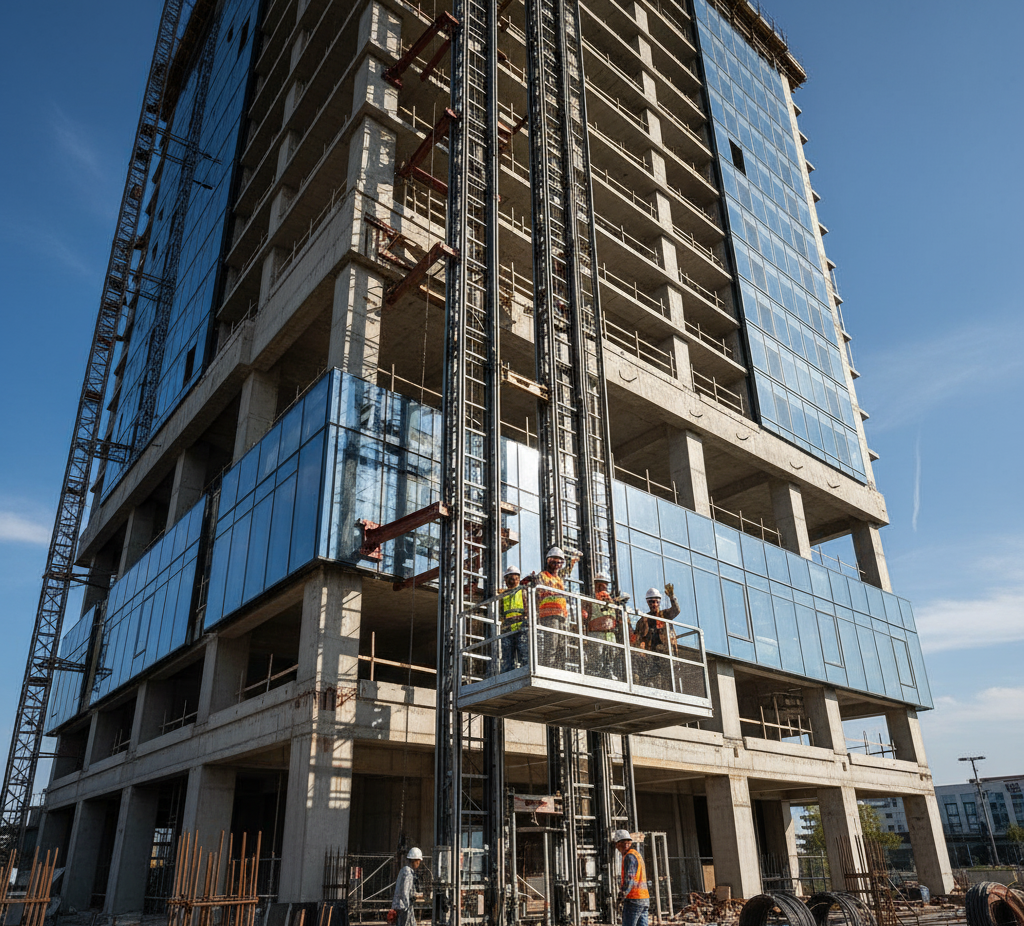
Traditional hoisting methods, including crane-dependent material lifts, consistently create bottlenecks as structural floors multiply and crane demand intensifies across multiple trades. Multilift elevators resolve this by operating independently of tower cranes, freeing critical lifting capacity for structural steel, formwork, and prefabricated assemblies. Rack-and-pinion drive systems deliver smooth, controlled transit for both personnel and heavy materials, reducing handling risk and transit time across all active floors.
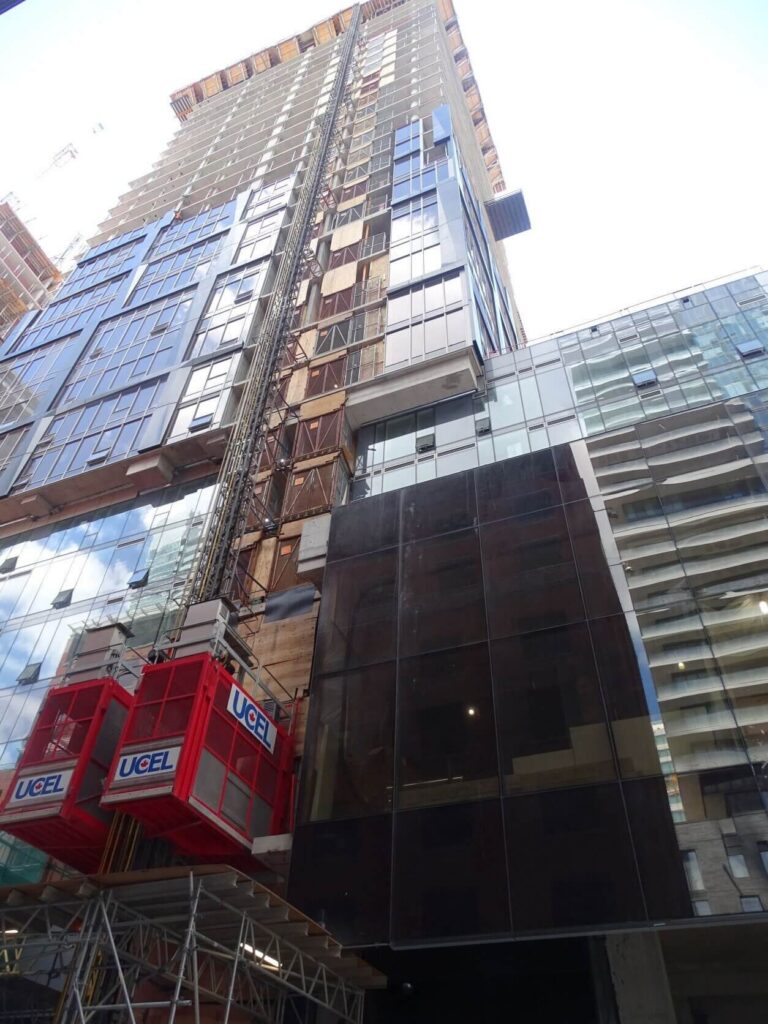
The modular mast design is a decisive logistical advantage: sections are added incrementally as the building rises, eliminating the need to re-mobilize or reconfigure the system mid-project. This scalability is widely recognized as best practice on tall commercial and mixed-use builds. Developers who delay committing to a dedicated hoist solution often face compounding access constraints that are difficult to resolve without disrupting active trades, a risk that proper early planning eliminates.
Safety Features of Multilift Construction Elevators
Safety compliance on high-rise sites is non-negotiable, and multilift construction elevators are engineered to meet that standard through multiple redundant systems. Overspeed brakes engage automatically under fault conditions, preventing uncontrolled descent regardless of load or environmental factors. Overload sensing technology prevents the car from operating beyond rated capacity, protecting both personnel and structural connections.
Enclosed car designs shield workers and sensitive materials from wind, rain, and debris exposure, which is a consistent concern on open-face high-rise structures. Integrated roof flaps allow safe assembly and tie-in connections to be completed from inside the car, eliminating the need for workers to operate in exposed positions at height.
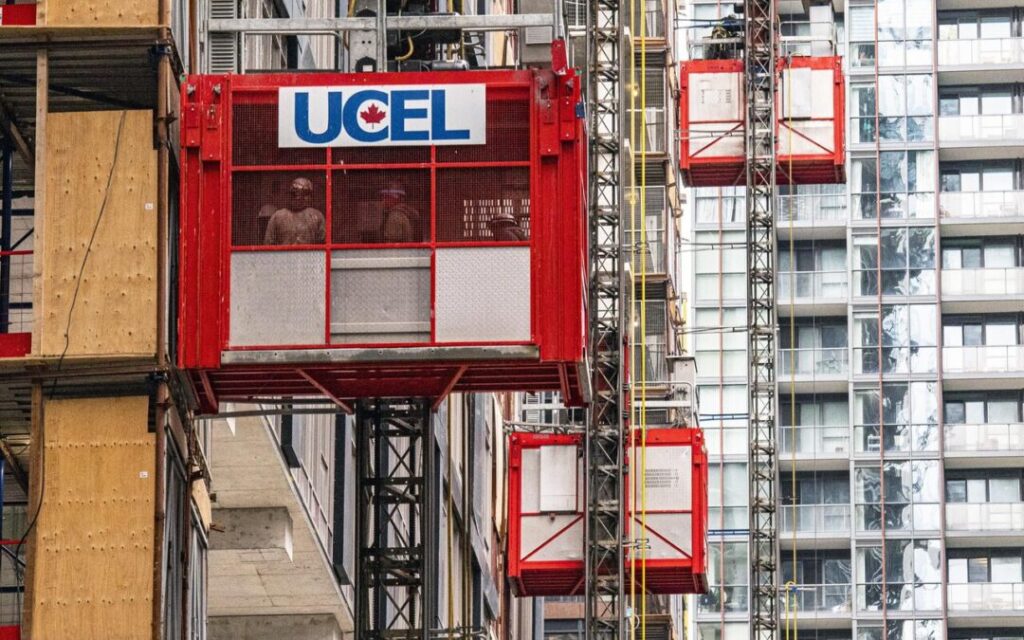
Equipment sourced through UCEL Inc. is backed by manufacturing partners whose products carry certifications including ISO, ANSI, TUV, and CSA standards, providing procurement teams with verifiable compliance documentation rather than unsubstantiated assurances.
Securing Multilift Construction Elevators Through UCEL Inc.
Procurement decisions for construction hoists require more than a capacity specification. Equipment managers must evaluate load ratings, mast anchor spacing, floor-to-floor cycle requirements, and site-specific access constraints before finalizing any order. Skipping this evaluation phase consistently leads to mobilization delays, installation conflicts, and costly mid-project modifications.
UCEL Inc. brings structured project support to this process, offering both rental and sales options to match each project’s financial model, whether a short-duration commercial fit-out or a multi-year tower development. Custom configurations are available for projects with non-standard floor heights, restricted footprints, or phased construction sequences. UCEL Inc.’s partnerships with leading global manufacturers ensure access to equipment that meets the technical demands of tall building projects.
Developers who engage UCEL Inc. early in the planning cycle consistently position their sites for smoother mobilization, tighter adherence to schedule, and a safer vertical-access environment throughout the build. Contact us now!