
When a project needs vertical access for materials, early planning often brings up two options: a dedicated material hoist and a transport platform. Both travel along a mast, both serve multiple levels, and both can reduce the amount of material crews carry by hand. However, they are not designed for the same jobs.
The choice depends on building height, material volume, the need to move personnel, and the type of work being performed. This comparison explains how each system works, where each fits best, and what questions to answer before committing to either.
What is a Material Hoist?
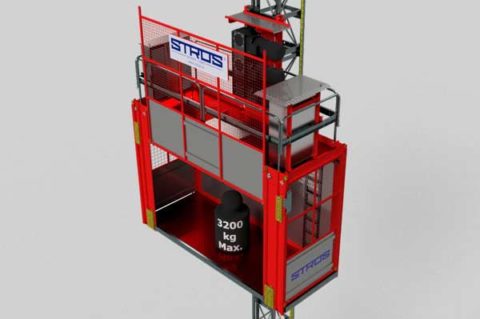
A construction material hoist is a temporary vertical lifting system that moves building materials, tools, and equipment between grade and upper floors. It typically uses a car or hoist platform that travels along a mast tied to the structure at intervals set by the equipment design and the project engineer.
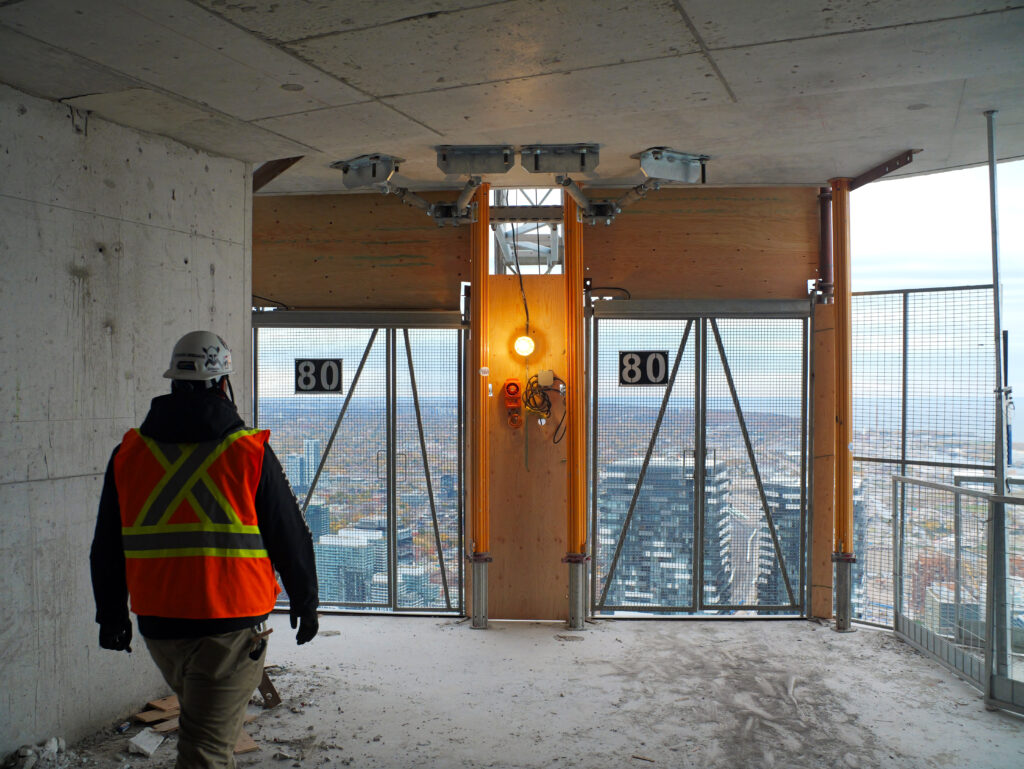
Material hoists are designed and rated for loads, not passengers. They are generally used as a dedicated logistics route on projects where bulk materials move frequently and in significant volume, such as mid- and high-rise residential, commercial, and institutional buildings. Their landings connect directly to floor slabs, allowing trades to move material from the car into the building.
What is a Transport Platform?
Transport platforms are mast-guided platforms generally designed for lower travel speeds than dedicated hoists. They are commonly used in low- and mid-rise buildings for façade installation, restoration, and renovation work.
Depending on the specific equipment and its approvals, a transport platform may be configured to carry materials and personnel to working levels. This makes it a flexible option on some projects, but you must confirm the capability for the specific unit, configuration, and jurisdiction. Not every transport platform is approved to carry workers.
Read our detailed guide on construction material hoists.
Material Hoist vs. Transport Platform at a Glance
| Factor | Material Hoist | Transport Platform |
|---|---|---|
| Primary purpose | Dedicated vertical movement of materials, tools, and equipment | Vertical access for materials and, where designed and approved, personnel |
| Typical building types | Mid- and high-rise construction with sustained material volume | Low- and mid-rise buildings, façade, restoration, and renovation work |
| Travel speed | Depends on the equipment; generally suited to frequent trips | Generally designed for lower travel speeds |
| Personnel transport | Not permitted unless designed, configured, and approved for personnel | Possible only where the specific unit is designed and approved for it |
| Floor interface | Landings connected to floor slabs | Depends on configuration and project setup |
| Best fit | High material volume and repeated daily trips | Flexible access where volume, height, or project type suits a platform |
Note: Capacities, speeds, and dimensions vary by equipment. Confirm all specifications with the supplier and manufacturer documentation.
When Does a Dedicated Material Hoist Make Sense?
A dedicated material hoist usually makes sense when material movement drives the project schedule. Common indicators include:
- Sustained volume: Many trades need regular deliveries to upper floors over an extended period.
- Building height: More floors mean longer trips and more total travel, which places greater demand on the equipment.
- Repeated daily cycles: Interior trades such as drywall, mechanical, and electrical need predictable access throughout the day.
- Separate personnel solution: Workers already have dedicated vertical access so that the material hoist can focus on loads.
- Waste removal: The project generates steady volumes of waste and packaging that must come back down.
In these conditions, separating material movement from crane picks and from personnel traffic helps each system operate as intended.
When Can a Transport Platform Be the Better Fit?
A transport platform is a better fit when project conditions favor flexibility over volume. Indicators include:
- Lower building heights: Low- and mid-rise projects with shorter travel distances.
- Façade and envelope work: Projects where trades need access along the building face.
- Renovation and restoration: Existing buildings where installation space and building interface options are limited.
- Combined access needs: Projects where a platform approved for materials and personnel can serve both needs without excessive competition for trips.
- Moderate material volume: Loads that do not require a high-frequency dedicated route.
Before choosing a transport platform for personnel, confirm the unit’s approvals and the requirements that apply in the project’s province. Can Workers Ride a Construction Material Hoist? What Project Teams Need to Know covers that question in more detail.
Consider How Personnel and Materials Compete for Vertical Access
The most useful comparison isn’t equipment against equipment; it’s demand against capacity. On every project, personnel and materials compete for the same vertical routes, especially at shift start, after breaks, and during peak delivery periods.
If one system serves both needs, crew movement can delay deliveries, and deliveries can leave crews waiting. Separating the two with different equipment, or scheduling clear windows for each, reduces that conflict. The balance also changes over time. Structural work, enclosure, and interior finishing each create different demand patterns, as explained in Material Flow by Construction Phase: How Hoist Demand Changes From Structure to Interior Finishing.
Mapping expected personnel and material traffic by phase gives the team a clearer picture of whether one system is sufficient or whether separate solutions are needed. Material hoists and transport platforms can also work together on the same project when demand justifies it.
Questions to Ask Before Choosing Either System
- What is the building height, and how many levels must be served?
- What materials will move, including maximum sizes and weights?
- How many trips per day are expected at peak?
- Do workers also need vertical access, and is the equipment approved for it?
- Is the work interior, façade-focused, or both?
- What site space, foundation, and tie-in options are available?
- How will demand change across construction phases?
- Which provincial requirements apply to the equipment and its use?
Clear answers make it easier to compare options on project needs rather than general preference. To discuss whether a material hoist, a transport platform, or a combination suits your jobsite, contact UCEL Inc. to review your project requirements.
People Also Ask
What is the main difference between a material hoist and a transport platform?
A material hoist provides a dedicated route for moving materials, typically on projects with high, sustained volume. A transport platform is generally designed for lower travel speeds and may carry materials and, where approved, personnel on low- and mid-rise or façade work.
Are transport platforms suitable for high-rise construction?
Transport platforms are more commonly considered for low- and mid-rise work. Suitability depends on the equipment, its rated limits, and the project’s demand.
Can a project use both a material hoist and a transport platform?
Yes. Some projects use both, for example, a material hoist for bulk interior deliveries and a transport platform for façade work, when demand and site conditions justify it.
How do I choose between a hoist and a transport platform?
Compare building height, material volume, personnel access needs, type of work, site constraints, and how demand changes by phase, then confirm equipment specifications and approvals with the supplier.