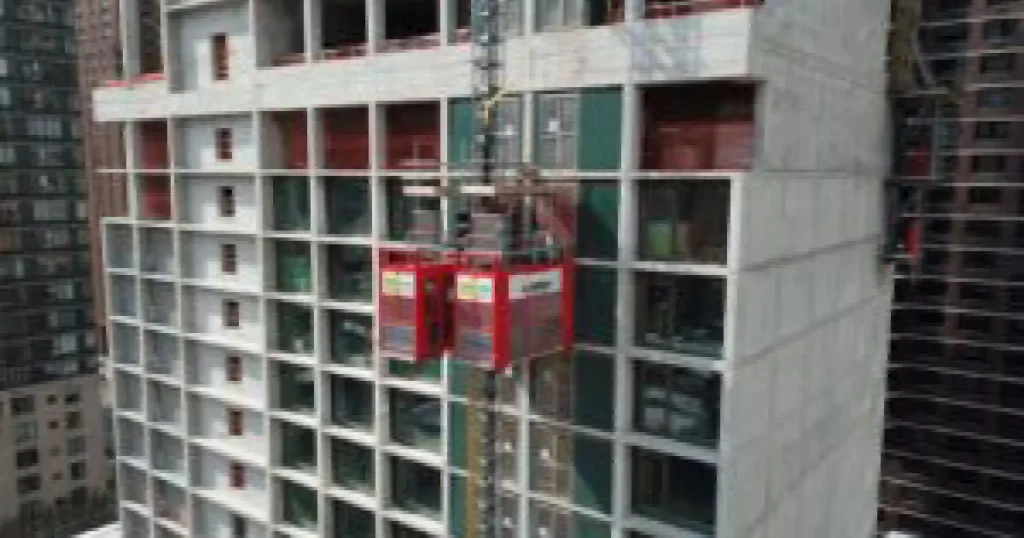
Vertical access is one of the most consequential logistical variables on any high-rise construction site. When material hoists are absent or undersized, cranes absorb lifting duties they were never intended to carry continuously, creating cascading schedule pressure across every trade on site. The cost of getting this wrong compounds quickly: delayed material delivery stalls floor cycles, inflates labor idle time, and introduces safety exposure that no project manager can afford to ignore.
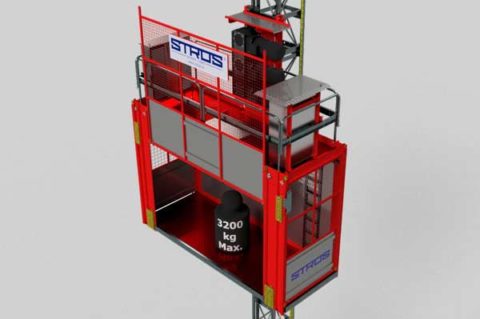
Rack-and-pinion material hoists address this directly by providing a dedicated, high-capacity vertical transport solution that operates independently of the crane. Selecting the right equipment, from a supplier with genuine engineering depth, is not a procurement formality. It is a foundational decision that shapes site productivity from groundbreaking through topping out.
How Material Hoists Resolve Vertical Access Challenges
Rack-and-pinion drive systems deliver consistent lifting performance across conditions that routinely compromise alternative methods. Wind, rain, and temperature variation that would restrict crane operations rarely affect a properly enclosed hoist for construction materials, keeping material flow predictable across the full project schedule.
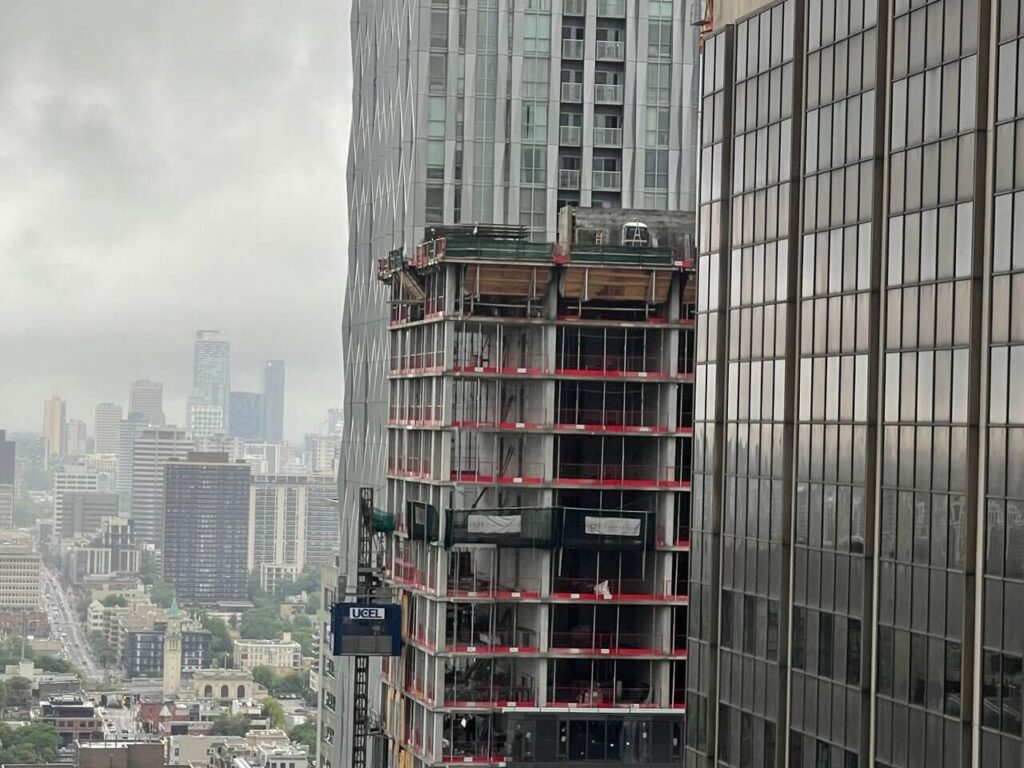
Rack-and-pinion material hoists attach directly to the building as it ascends, eliminating the need for extensive foundation work and reducing both site footprint and setup complexity. This is particularly important in urban environments where available ground space is limited. Eliminating manual carrying of heavy loads across multiple floors also produces a measurable reduction in worker fatigue and a materially lower risk profile for musculoskeletal injury and dropped-load incidents. Continuous, mechanized vertical transport keeps trades supplied and productive without interruption.
Key Safety Mechanisms in Material Hoists for Construction
Material hoist construction at the engineering level is defined by layered, redundant safety systems rather than single-point protections. Emergency braking mechanisms, typically centrifugal or electromechanical in design, engage automatically if descent speed exceeds the rated threshold, preventing uncontrolled lowering under any load condition.
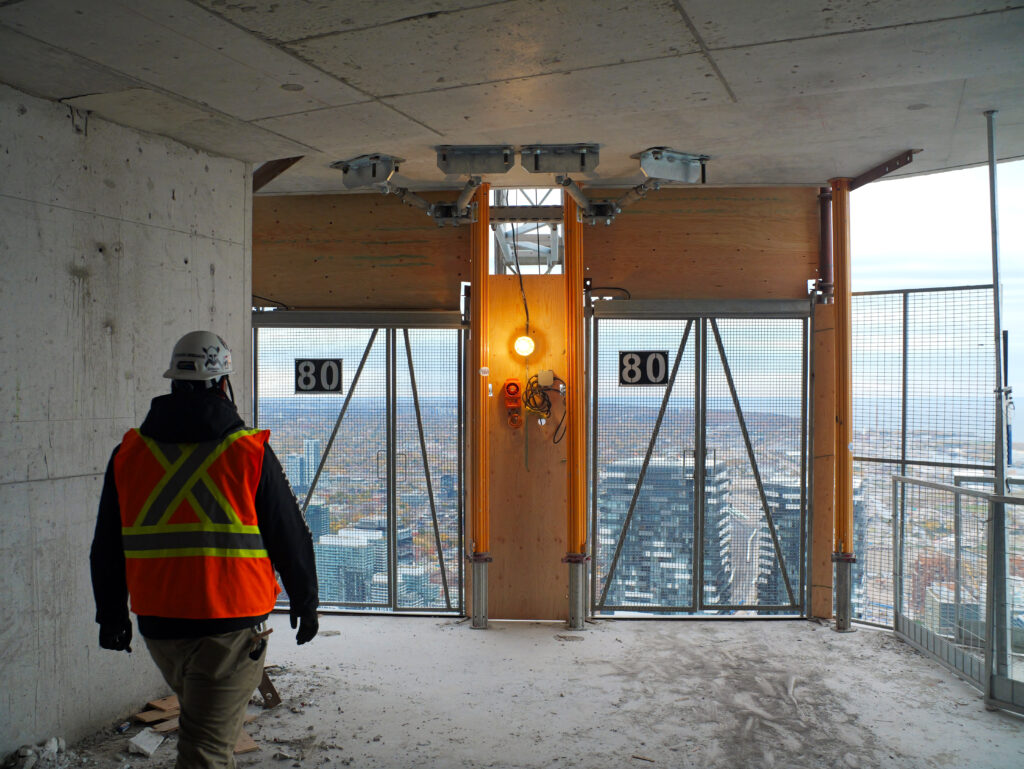
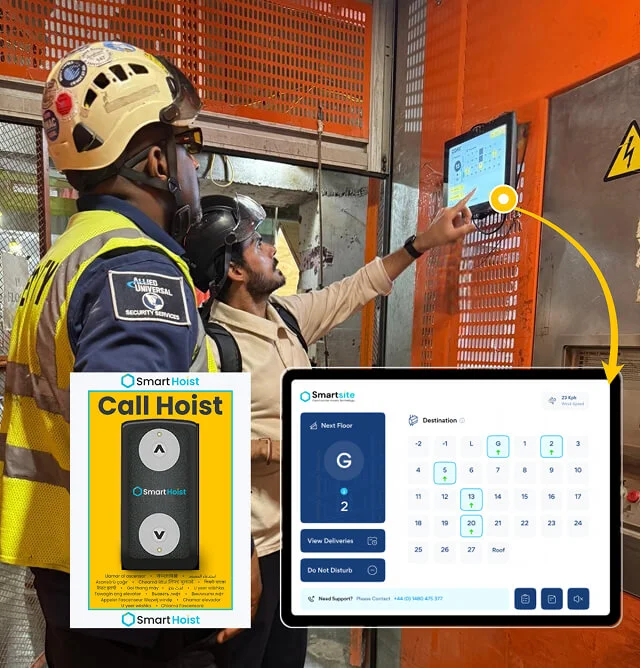
Overload protection sensors are equally critical. These systems monitor payload in real time and halt the drive mechanism before the carriage ever moves with an unsafe load, protecting both the equipment and the structure to which it is anchored. Interlocking gate systems add a further layer: the carriage cannot travel while any landing gate remains open, and no gate can be opened while the carriage is in transit. Together, these mechanisms reflect the safety standards, including ANSI and CSA requirements, that reputable manufacturing partners build into certified equipment. Procurement teams should verify that the equipment sourced carries documentation from recognized certification bodies rather than relying on supplier assurances alone.
Why Managers Choose Material Hoists from UCEL Inc.
A dedicated hoist for construction materials eliminates the scheduling conflicts that arise when cranes serve double duty, and UCEL Inc. has supported that operational logic since its founding in 1963. That depth of experience across tall building projects, industrial facilities, and complex infrastructure sites translates into engineering support that goes beyond equipment delivery.
UCEL Inc. offers both rental and sales agreements, giving project managers the flexibility to match procurement structure to project timeline and budget without compromise. The company works with leading global manufacturers whose equipment carries ISO, ANSI, TUV, and CSA certifications, ensuring that every unit deployed meets recognized safety and performance standards. Custom configurations are available for non-standard site conditions, and project support extends through installation, commissioning, and operational guidance. For developers managing tight schedules on tall structures, sourcing material hoists from a supplier without this breadth of capability is a risk that rarely stays contained to logistics alone. For more details, contact us now!