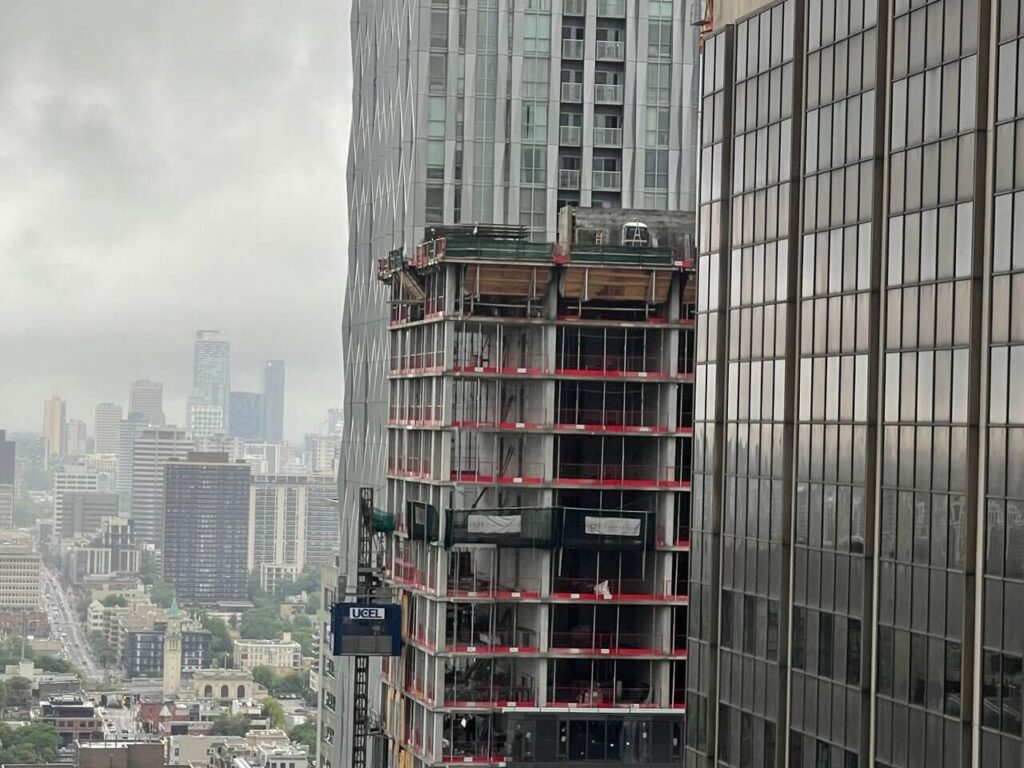
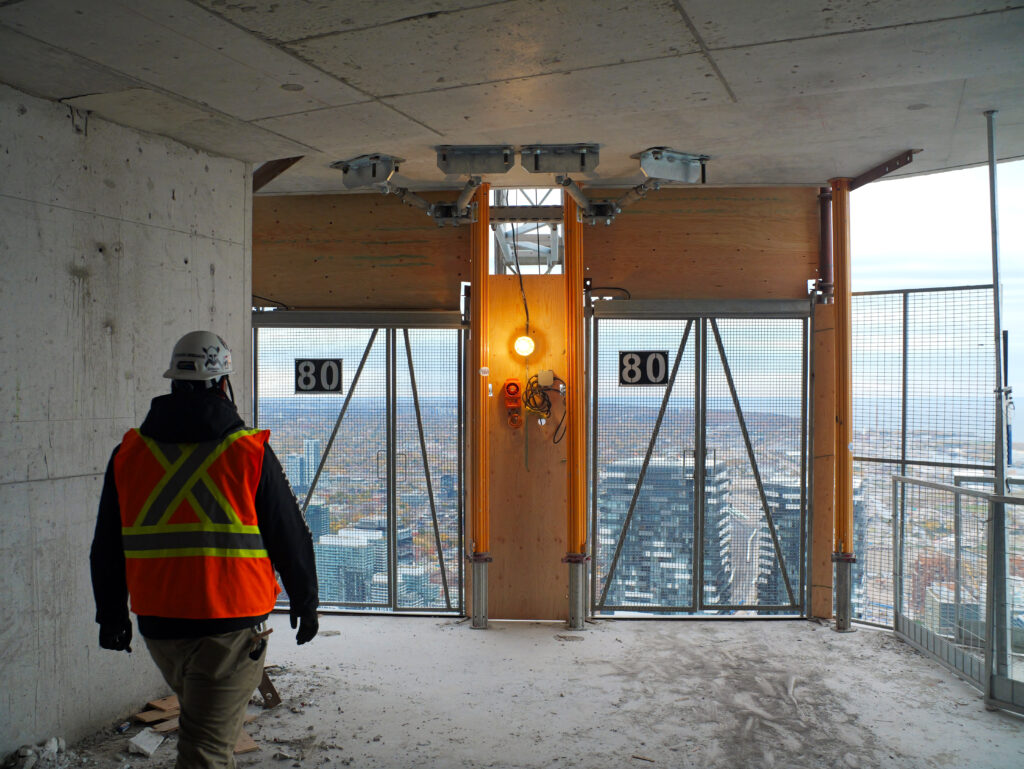
As floor count increases, construction logistics become more complex. Workers need reliable access to active levels, materials must reach installation areas on schedule, and loading zones must remain organized as multiple trades operate at the same time.
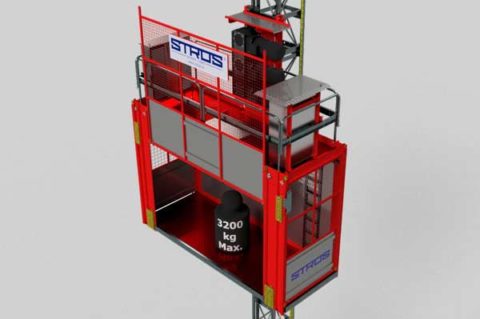
High-rise construction hoists provide dedicated vertical transportation for workers, tools, and building materials throughout the construction process. By reducing reliance on stairs, cranes, and improvised lifting methods, hoists help project teams coordinate movement across the site more effectively.
For contractors, a hoist’s value goes beyond simple lifting capacity. Hoist location, landing access, workforce demand, material flow, and construction sequencing all influence how well the system supports day-to-day operations.
Why Vertical Transportation Becomes More Complex as Buildings Rise
The higher a building becomes, the more time workers and materials spend travelling between levels. What may be a short trip during early construction can become a significant operational issue once dozens of floors are active.
Longer travel distances put more pressure on vertical transportation systems because each trip takes longer. Additional stops also increase loading and unloading cycles throughout the day.
Project teams must account for:
- Building height
- Number of active floors
- Workforce size
- Delivery frequency
- Number of trades using the hoist
- Peak traffic periods
Without sufficient planning, vertical access can become a bottleneck that affects multiple areas of the project.
Moving Workers Between Active Levels
Workers need dependable access to upper floors throughout the day.
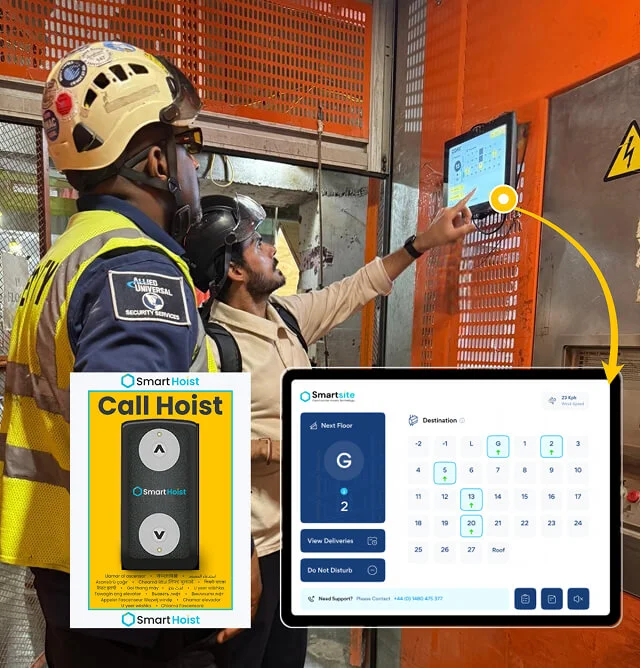
Morning arrivals, break periods, shift changes, and movement between work areas can create heavy passenger demand. If workers spend too much time waiting for transportation, productivity can suffer before work even begins.
High-rise construction hoists help reduce this issue by providing a dedicated path between ground level and active floors.
Workforce planning should consider:
- Total daily worker volume
- Trade distribution by floor
- Shift schedules
- Peak arrival periods
- Frequency of movement between levels
Larger projects may also require multiple cars, or dedicated personnel hoists alongside material transport, to prevent congestion.
Transporting Materials and Equipment to Work Areas
Material movement creates different demands. That’s why many sites run material hoists separately from passenger transport.
A construction material hoist may transport drywall, framing systems, mechanical equipment, electrical components, windows, tools, and other supplies needed by active crews.
The challenge is not only weight. Material dimensions and delivery frequency also affect hoist use.
For example, large but relatively lightweight materials may require substantial platform space. Heavy equipment may require fewer trips but higher load capacity.
Project teams should therefore plan for:
- Maximum load weight
- Material dimensions
- Delivery frequency
- Loading methods
- Floor staging areas
A properly planned construction material hoist supports smoother delivery to work areas while reducing unnecessary handling.
Reducing Congestion Around Ground-Level Loading Areas
Ground-level staging areas can quickly become congested on busy high-rise sites.
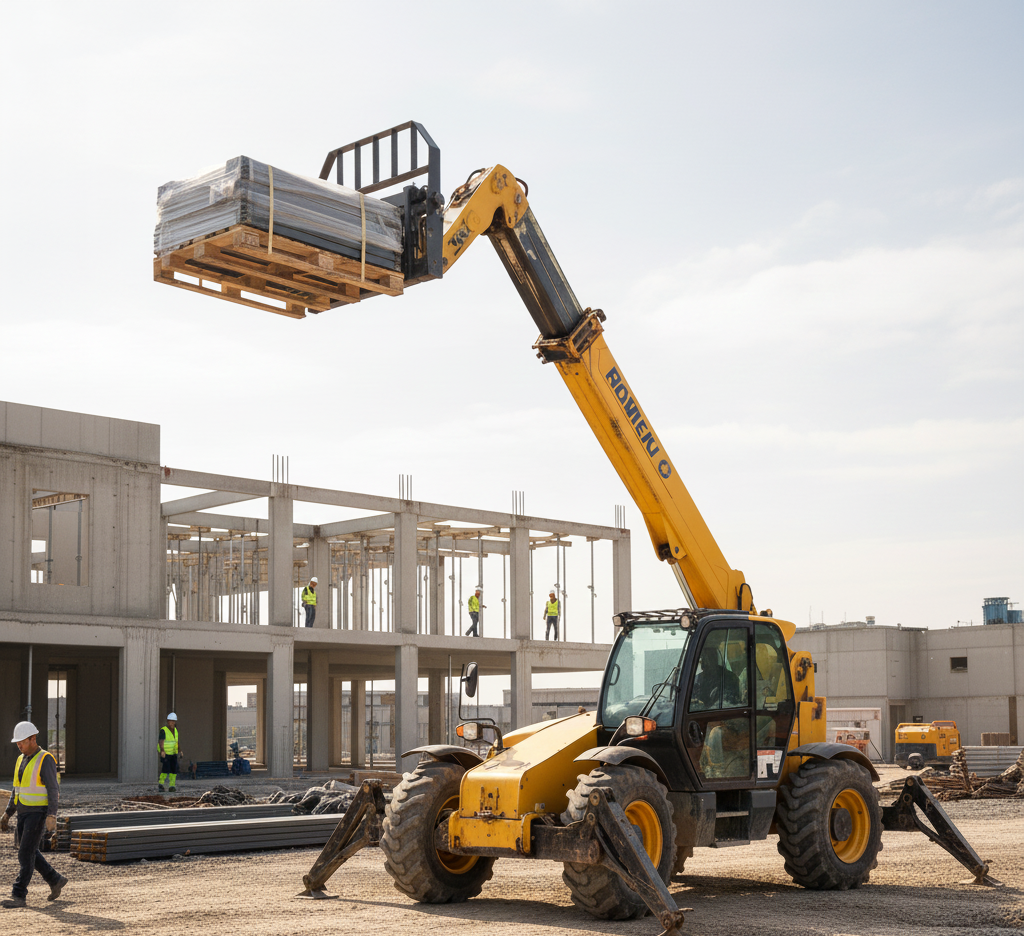
Delivery trucks, forklifts, workers, cranes, and hoist operations may all compete for limited space. Poor coordination can slow loading, block access routes, and disrupt other site activities.
Hoist planning should include a clearly defined loading zone with enough space for:
- Material staging
- Forklift access
- Worker circulation
- Delivery vehicle movement
- Safe loading and unloading
Separating passenger movement from material staging where possible can also improve workflow.
Well-organized ground-level operations help the entire vertical transportation system function more efficiently.
Coordinating Hoist Use With Construction Activities
A construction hoist does not operate independently from the rest of the site.
Its schedule must align with crane lifts, material deliveries, concrete work, façade installation, and interior construction activities.
Project teams may use dedicated time windows for specific tasks, such as:
- Worker transportation
- Material deliveries
- Equipment movement
- Waste removal
This approach helps prevent competing demands from creating unnecessary delays.
Coordination becomes particularly important when multiple trades require access to the same floors at similar times.
Managing Peak Vertical Traffic During the Workday
Peak periods often determine whether a hoist system can support site demand effectively.
Morning mobilization is typically one of the busiest periods. Large groups of workers may need to reach different levels within a short timeframe.
Other peak periods can include:
- Lunch breaks
- Shift changes
- Major material deliveries
- End-of-day departures
High-rise construction hoists should be planned around these high-demand periods rather than average daily traffic.
Scheduling material deliveries outside peak passenger periods can help improve movement for both workers and supplies.
On larger projects, twin car configurations may provide additional capacity during periods of heavy traffic.
How Landing Locations Affect Site Workflow
Landing placement influences what happens after workers or materials leave the hoist.
If a landing is far from active work areas, workers may still spend significant time moving through the floor. Materials may also require additional handling before reaching their final installation location.
Effective landing planning considers:
- Trade work areas
- Material storage zones
- Building circulation routes
- Structural openings
- Future construction activities
The objective is to reduce unnecessary horizontal travel after vertical transport is complete.
Landing locations may also need to change as construction progresses and different floors become active.
Adapting Vertical Access as Construction Progresses
Vertical transportation requirements change throughout the project lifecycle.
Early structural phases may involve fewer workers and heavier materials. Later stages often bring larger numbers of mechanical, electrical, glazing, and finishing trades into the building.
A construction material hoist may therefore be used differently during various phases.
Project teams should review changing requirements during:
- Structural work
- Building enclosure
- Mechanical installation
- Electrical work
- Interior finishing
- Commissioning
Hoist systems may also require mast extensions as the building rises. These extensions should be coordinated with structural work and crane operations to minimize disruption.
Planning for change helps the vertical access system remain useful throughout the complete construction sequence.
Why Hoist Planning Should Be Part of the Overall Logistics Strategy
Vertical access should not be treated as a separate equipment decision.
High-rise construction hoists influence workforce movement, material delivery, crane usage, staging areas, and floor-level logistics. For that reason, they should be integrated into the overall construction logistics plan from the beginning.
Early planning helps contractors evaluate:
- Hoist placement
- Required capacity
- Platform dimensions
- Number of cars
- Landing locations
- Delivery routes
- Power requirements
- Installation timing
UCEL Inc. supports contractors with rental and sales solutions, project consultation, and vertical access planning for demanding construction environments. Early coordination helps identify a configuration that supports both current site conditions and future project phases.
Conclusion
Reliable vertical transportation is essential to maintaining efficient movement across high-rise construction sites. As buildings rise, workers, materials, and equipment must travel greater distances while multiple trades compete for access.
Properly planned high-rise construction hoists help organize this movement by providing dedicated access between active floors. A well-configured construction material hoist also supports consistent material delivery while reducing pressure on cranes and manual handling routes.
The most effective approach is to plan hoist capacity, location, landing access, and scheduling as part of the complete site logistics strategy. UCEL Inc. provides vertical access expertise, rental and sales options, and project support to help contractors align hoist systems with building height, workforce demand, and construction sequencing.
People Also Ask
What Are High-Rise Construction Hoists Used For?
High-rise construction hoists transport workers, materials, tools, and equipment between active building levels.
What Is a Construction Material Hoist?
A construction material hoist moves building materials and equipment vertically during construction.
How Are Hoists Coordinated With Site Logistics?
Hoist schedules are often coordinated with worker traffic, material deliveries, crane operations, and trade activities.
Do Hoist Requirements Change During Construction?
Yes. Workforce size, material flow, building height, and active work areas change as the project progresses.