Rack-and-pinion and wire-rope traction systems can both provide reliable vertical access, but they operate on very different principles. A rack and pinion elevator uses gears that engage a fixed rack, making it practical for exposed industrial and construction environments. Wire-rope traction systems rely on ropes, sheaves, and typically a counterweight, making them better suited to applications where higher speeds, smooth travel, and frequent passenger movement are priorities.
Why the Drive Mechanism Matters
The drive mechanism affects speed, structural requirements, maintenance access and how the equipment responds to its operating environment. A solution that works well inside a high-rise commercial building may not make sense on the exterior of a silo, processing plant or industrial tower.
Choosing vertical access equipment is not only about how much weight it can carry or how high it can travel. The way the equipment moves matters just as much.
That is why rack-and-pinion and wire-rope systems should be compared around the conditions they will actually face.
How a Rack-and-Pinion Hoist Works
A rack & pinion elevator moves through direct mechanical engagement. Motor-driven pinion gears on the car mesh with a fixed toothed rack attached to the mast or supporting structure. As the pinions rotate, the car travels vertically along the rack.
This arrangement gives the system considerable installation flexibility. Many designs can operate without the conventional machine room or fully enclosed elevator shaft associated with traditional building elevators.
For that reason, a rack and pinion lift is commonly considered for power plants, mines, silos, towers, petrochemical facilities and other sites where access may be exposed or difficult to integrate into a standard elevator layout.
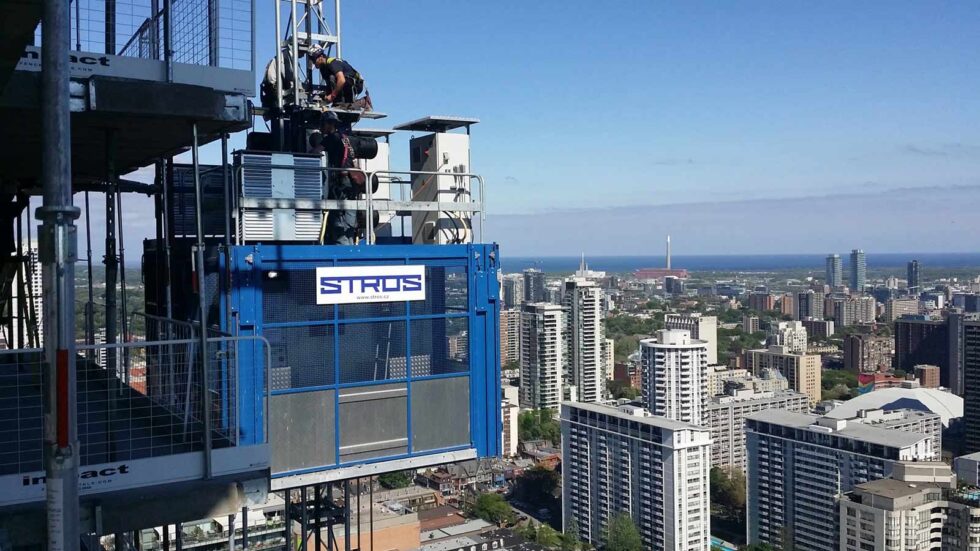
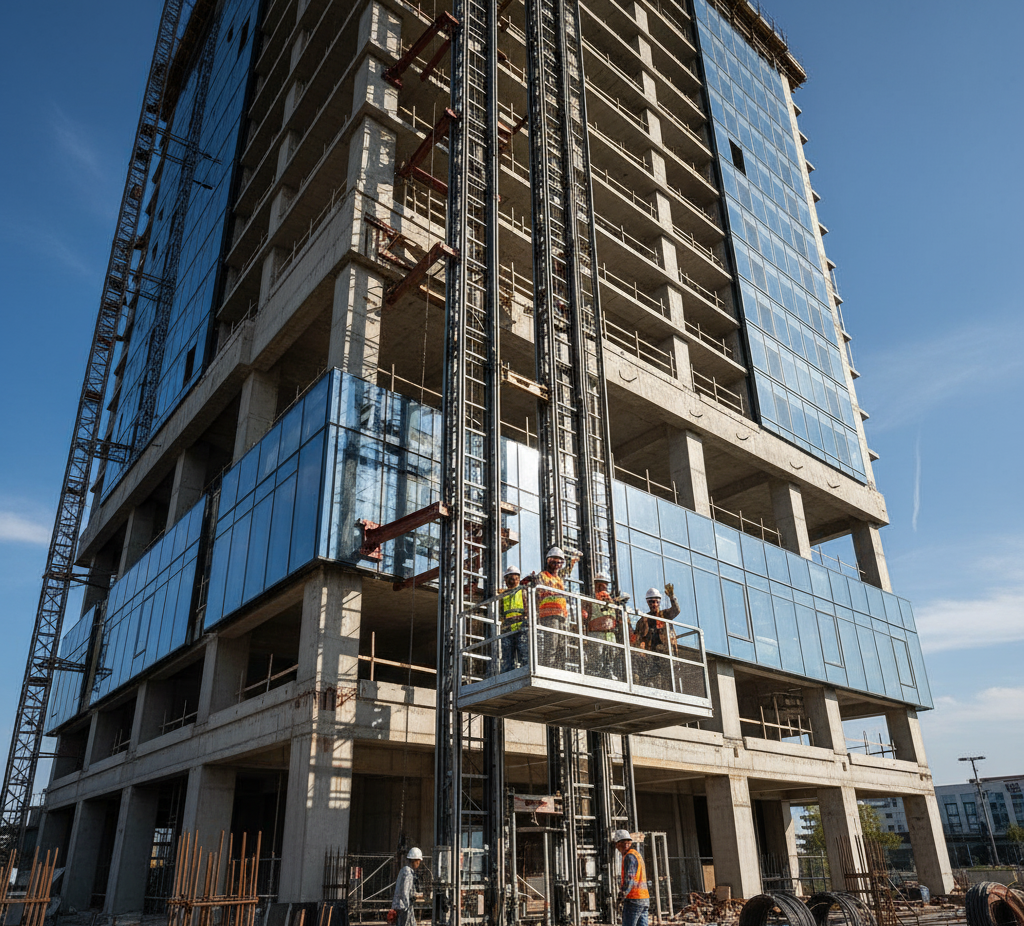
Rack-and-pinion technology is also widely used for temporary access on tall construction projects.
The term electric rack-and-pinion scaffolding is sometimes used when discussing mast-based access equipment, but it is important to distinguish between mast-climbing work platforms, construction hoists and permanent personnel elevators. They serve different purposes and fall under different equipment requirements.
Site teams planning facade or masonry work can find setup and maintenance guidance in our guide to scaffolding hoists.
How a Wire-Rope Traction System Works
A traction elevator takes a different approach.
Steel wire ropes, or other approved suspension members, pass over a driven sheave and connect the elevator car to a counterweight. Turning the sheave moves the car and counterweight in opposite directions.
This configuration is well suited to permanent building applications because it can support fast, smooth and frequent travel over long vertical distances. That is why traction technology remains common in high-rise residential towers, office buildings, hotels and other properties with significant passenger traffic.
It should not, however, be confused with a basic drum-type wire-rope material hoist. The operating principles and intended applications are different.
UCEL Inc. supplies rack-and-pinion vertical access solutions for construction and industrial applications where site conditions, structural limitations, and operating demands require a more specialized approach.
Load Capacity and Speed Are Not the Same Question
Load capacity alone does not determine which mechanism is better.
Both elevators can be engineered for demanding payloads. Permanent rack-and-pinion equipment can move personnel and heavy materials, while traction elevators can also be designed for large passenger or freight loads.
Speed creates a clearer distinction.
Permanent industrial rack-and-pinion units generally operate at more moderate speeds because the priority is often dependable access in demanding conditions rather than rapid passenger movement. Traction elevators, particularly those designed for high-rise buildings, can travel considerably faster.
Temporary construction hoists are another category altogether, so their speeds should not be used as a direct comparison with permanent industrial equipment.
High-Rise or Industrial? Height Alone Does Not Decide
It is easy to assume that traction systems are for tall structures and rack-and-pinion equipment is for shorter ones.
Traction elevators are usually the stronger choice for permanent high-rise buildings where passenger volumes, waiting times, ride quality and travel speed carry significant weight.
A rack & pinion elevator, however, can also serve very tall structures. The difference is usually the application rather than the height itself.
Industrial towers, stacks, bridges, plants and exposed structures may benefit from rack-and-pinion technology because it can follow the structure and operate in locations where a conventional elevator shaft would be difficult or costly to build.
Since 1963, UCEL Inc. has worked with rack-and-pinion equipment for construction and industrial environments, where access requirements often extend beyond what a conventional building elevator is designed to handle.
For industrial applications specifically, our guide to heavy-duty industrial elevator design and safety covers the features that matter most in continuous-use environments.
Maintenance and Reliability Depend on Different Components
Neither system eliminates maintenance. What changes is where maintenance attention is needed.
Rack-and-pinion equipment requires regular inspection of the rack teeth, pinion gears, guide rollers, brakes, alignment, lubrication and safety devices.
Traction systems bring a different set of wear points, including suspension ropes, sheaves, rope tension, braking components and drive equipment.
For harsh or exposed installations, removing long suspension ropes from the drive arrangement can be an advantage of rack-and-pinion technology. That does not make the system maintenance-free. Proper inspection intervals, manufacturer requirements and applicable ASME A17.1/CSA B44 provisions still need to guide the maintenance plan.
Initial Cost Tells Only Part of the Story
The lowest equipment price does not necessarily produce the lowest project cost.
A rack-and-pinion installation may reduce structural requirements where building a conventional hoistway, machine room, or substantial overhead support would otherwise add complexity on an industrial site, which can make a meaningful difference.
Traction systems may require greater integration with the building but can offer clear operational value where high speed and heavy passenger traffic are part of everyday use.
The better comparison is lifecycle cost. Installation, structural modifications, energy consumption, inspection requirements, replacement parts, maintenance access, and downtime should all be considered before judging one system more economical than the other.
Rack-and-Pinion vs. Wire-Rope Traction at a Glance
| Factor | Rack-and-Pinion | Wire-Rope Traction |
|---|---|---|
| Drive method | Pinion gears engage a fixed rack | Ropes move across a traction sheave |
| Typical fit | Industrial, exterior, specialty and construction access | Permanent mid- and high-rise passenger service |
| Operating speed | Generally moderate in permanent industrial applications | Typically higher |
| Structural requirements | Can reduce the need for a conventional shaft or machine room | Usually integrated into a dedicated hoistway |
| Key maintenance areas | Rack, pinion, rollers and brakes | Ropes, sheaves, tension and brakes |
| Exposed environments | Often well suited when properly specified | Typically benefits from a protected installation |
Final Word: Let the Site Determine the Elevator Mechanism
There is no single drive system that is better for every vertical-access project.
Travel height matters, but so do payload, operating frequency, environmental exposure, available structure, passenger expectations and maintenance access.
Specialty rack & pinion elevators can address industrial and structural conditions that are difficult to accommodate with conventional traction equipment. Traction systems remain a strong fit when fast, frequent passenger movement is the main requirement.
Before specifying equipment, a qualified rack & pinion elevator distributor should review the site, expected duty cycle, structural conditions and long-term service requirements. The mechanism should fit the application, rather than forcing the application to fit the mechanism.
If you are still not sure which mechanism fits your next project? Talk to UCEL Inc. before equipment is ordered. Our team will review your site height, load requirements, and project duration, and recommend the mechanism built for your specific job, not a default choice.
Frequently Asked Questions
1. Which is safer, a rack and pinion elevator or a wire rope hoist?
Rack and pinion elevators are generally considered safer, since the gear engages the rack directly and cannot slip under load. Wire rope systems rely on friction, so rope and sheave condition matter more for safety.
2. Can a rack and pinion lift be used on a permanent installation?
Rack and pinion systems are mainly built for temporary construction access, not long-term permanent use. Permanent elevators typically use wire rope or traction systems instead.
3. Why do industrial sites often use wire rope traction elevators?
Wire rope traction systems offer smoother, faster travel once installed, which suits continuous operation. They are well suited to fixed-height industrial shafts that don’t change over time.
4. Does a rack & pinion elevator need more maintenance than a wire rope system?
Both need regular maintenance, just on different parts. Rack and pinion systems need gear and drive checks, while wire rope systems need rope and sheave inspections.
5. How do I know which mechanism is right for my project?
It depends on your site. Temporary high-rise construction usually favours rack and pinion. Permanent or industrial installations usually favour wire rope traction systems.